


Rediscovering the Dead Sea Scrolls
An accessible introduction to the scrolls and their significance
Abigail Naidu
December 01, 2025
0 Comments
4412 views

Lost Words and Forgotten Worlds: Rediscovering the Dead Sea Scrolls
By Andrew Perrin
(Bellingham: Lexham Press, 2025), 348 pp., 66 figs. (color & b/w photos, maps); $28.99 (paperback), $25.99 digital)
Reviewed by Abigail Naidu
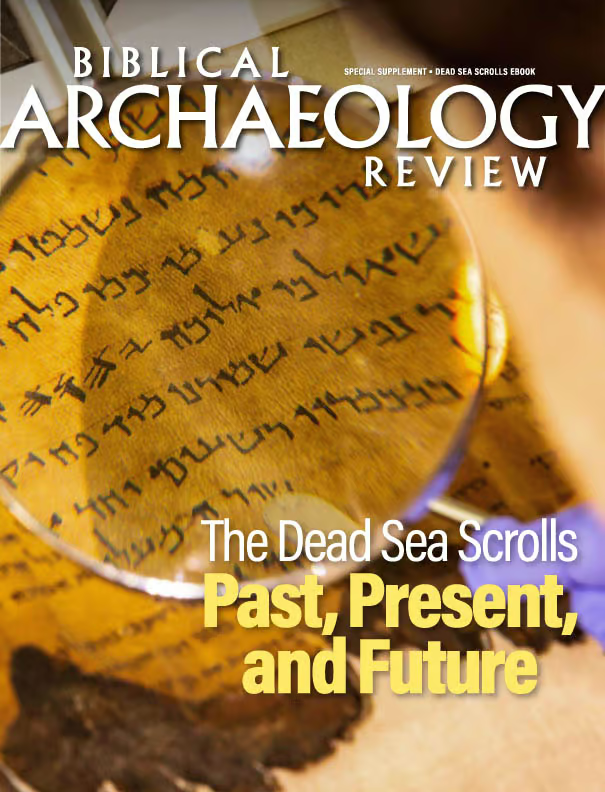
Nearly 80 years after their initial discovery, the Dead Sea Scrolls (DSS) continue to make headlines. Despite this fascination, many are unfamiliar with the portal these manuscripts open onto ancient Jewish life or the light they shed on the history and evolution of the Bible. In this lively and often humorous book, author Andrew Perrin does more than introduce the scrolls. He makes years of scholarship accessible, allowing readers to encounter the scribes of the scrolls and step into the world in which they lived.
A newcomer to the scrolls is faced with puzzling labels for the manuscripts, incomplete texts, and esoteric language. With a clear and pedagogical style, Perrin methodically explains and unpacks these ancient artifacts, equipping the reader with the tools to explore them further. He frequently includes excerpts from the documents themselves, accompanied by comprehensive explanations that contextualize the contents and elucidate their significance. Non-specialist readers are guided through the issues that have dominated scrolls scholarship in recent decades, including the stability of biblical texts through centuries of transcription, the social landscape the scribes inhabited, and the archaeology of the site of Qumran near where the scrolls were discovered.

The author describes the book as “an invitation,” an opportunity to journey into the words and worlds of the DSS that spanned the third century BCE to 70 CE. To this end, readers receive a crash course on ancient Jewish groups. Along-side overviews of the Pharisees and Sadducees, Perrin presents the primary sources on the Essenes, the group most often identified with the Qumran site and the DSS. In addition to the writings of Josephus, Philo, and Pliny, excerpts from the scrolls themselves are discussed, including the so-called “Rule Texts,” which provide instructions for life in the community. Perrin nuances the popular image of an ascetic, all-male community dwelling in the desert, demonstrating continuity as well as tension with broader Jewish society.
The Qumran site, nevertheless, remains central to any study of the scrolls, and readers will find a comprehensive overview of the site and its archaeology. Material remains—from burial grounds to pottery bowls to toilets—are introduced, explained, and contextualized, with a balanced presentation of the key scholarly debates. Perrin is careful to remind his readers of the need to consider the site and the scrolls on their own terms first, before putting them into conversation. He also acknowledges where we find more questions than answers, highlighting the humility and caution that is necessary when we study Qumran and its inhabitants.
Many will come to the scrolls by way of the Hebrew Bible, and the manuscripts continue to fuel debates about the reliability of the Bible. The DSS have given us the earliest copies of some of the Hebrew scriptures, and Perrin guides the reader along the route from ancient manuscripts to modern translations. The very term “Bible” is now considered anachronistic when applied to the scrolls, and we are helped to see “scripture as it was then before exploring what it has come to be now.” Using examples from the DSS, Perrin discusses scribal errors, variant readings, and scribal interpretation. His approach is balanced, acknowledging the complexity of the manuscript history of scriptural texts and the textual fluidity evidenced in the scrolls, but also the consistency evident across many biblical manuscripts.
Two subjects broached by Perrin are absent from many earlier introductions to the scrolls, and these chapters feel particularly fresh. First is the issue of forgeries, which has become topical following the identification of forged scroll fragments in several North American and European collections. Readers are introduced to the fascinating task of identifying forgeries through a series of “red flags,” including uncertain provenance but also claims of “groundbreaking” texts that just happen to solve theological controversies. Second, Perrin draws on his own specialization in the DSS to provide an overview of the texts written in Aramaic, a collection which—though less familiar to many—has significantly broadened the scholarly perception of Second Temple Judaism.
Replete with snappy soundbites, color pictures, and an engaging style, this book provides an easy entry into the words and worlds of the DSS. Perrin succeeds in presenting the best and most up-to-date scholarship on the scrolls in a consistently accessible way. He guides his readers through the key issues raised by the DSS, and at each juncture helps us see why the evidence of the scrolls matters, and what they have taught us.
Become a BAS All-Access Member Now!
Read Biblical Archaeology Review online, explore 50 years of BAR, watch videos, attend talks, and more

Related reading in Bible History Daily
All-Access members, read more in the BAS Library
First “Dead Sea Scroll” Found in Egypt Fifty Years Before Qumran Discoveries
A Short History of the Dead Sea Scrolls and What They Tell Us
Not a BAS Library or All-Access Member yet? Join today.
Related Posts



Must-Read Free eBooks

Unlock Unlimited Access to the Bible's Past

Unlock Unlimited Access to the Bible's Past
Become an All-Access Member to explore the Bible's rich history. Get Biblical Archaeology Review in print, full online access, and FREE online talks. Plus, enjoy special Travel/Study discounts. Don't miss out—begin your journey today!
