


Rare Shell Seal Shows Moon Imagery in Israel
Mother-of-pearl seal found at Iron Age Tel Hadid
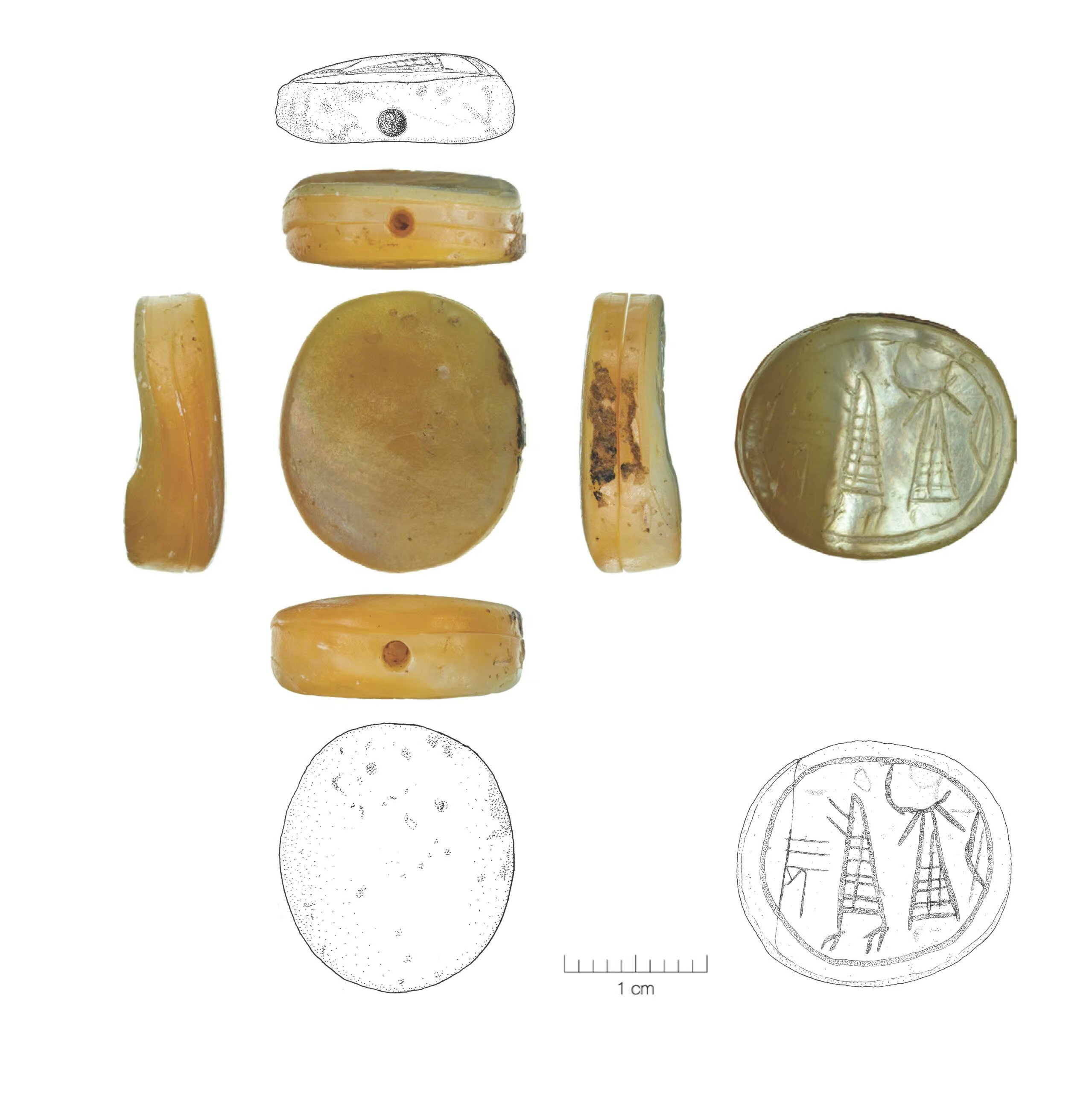
Mother-of-pearl stamp seal found at Tel Hadid. Credit: Ido Koch; photograph by Sasha Flit, drawing by Ulrike Zurkinden.
A rare shell seal has been discovered at Tel Hadid in central Israel with religious imagery involving a moon standard, a worshiper, and a possible altar. Measuring less than 2 centimeters across, the object was recovered from a seventh-century BCE refuse pit filled with pottery, animal bones, stone vessels, and ash. Given its archaeological context, the seal provides a glimpse into the world of the Bible during the height of Assyrian rule. It is the product of political and religious forces that reshaped the southern Levant after the Assyrian conquests.
Following the eighth-century campaigns of Assyrian kings such as Tiglath-pileser III, Shalmaneser V, and Sargon II, the Northern Kingdom of Israel was absorbed into the Neo-Assyrian Empire. Biblical texts describe deportations and population transfers that followed these conquests (2 Kings 15–17), while Assyrian records document the same policies from their perspective.
Tel Hadid was embedded within the Assyrian provincial system. Nearby excavations uncovered cuneiform tablets recording economic transactions according to Assyrian administrative formulas, including one dated to 664/663 BCE. The documents suggest the presence of imperial administration and possibly settlers who had arrived through forced resettlement.
The seal’s material is exceptional. According to the researchers, it is the first known mother-of-pearl stamp seal found from the southern Levant. Unlike most Iron Age seals, which were made from stone, this seal was carved from the iridescent inner layer of a mollusc shell. The shell was found to originate from the Indo-Pacific region, demonstrating participation in long-distance exchange networks. The seal likely symbolized the elevated status of its wearer.
The unusual material prompted a detailed investigation into how the object had been manufactured. Using microscopic analysis and elemental testing, researchers reconstructed the seal’s process of manufacture.
Their findings reveal that the shell was shaped into an oval and was perforated lengthwise from both sides by a drill, for example so it could be strung as a necklace. Examinations show that the drillings met near the center of the object with remarkable precision, demonstrating the work of an experienced hand.
The engraved picture involving the moon standard, worshiper, and possible altar was added later. By examining overlapping incisions, line depth, and tool marks, the team reconstructed the order in which the design was carved. They found that the engraving developed through a series of additions and corrections rather than being completed in one sitting. Further, elemental analysis revealed traces of lead and tin embedded within the grooves, likely transferred from a bronze etching tool. The evidence indicates that an artisan first prepared the shell and perforated it before the worship scene was engraved with a fine metal tool. The researchers leave open the possibility that the shell was procured and prepared in one place and carved in another.
The team notes that monumental artistic programs are rare in the archaeological record of the southern Levant, but seals preserve a rich archive of imagery. This one appears to depict a variation of the crescent-on-standard emblem associated with the moon god Sin.
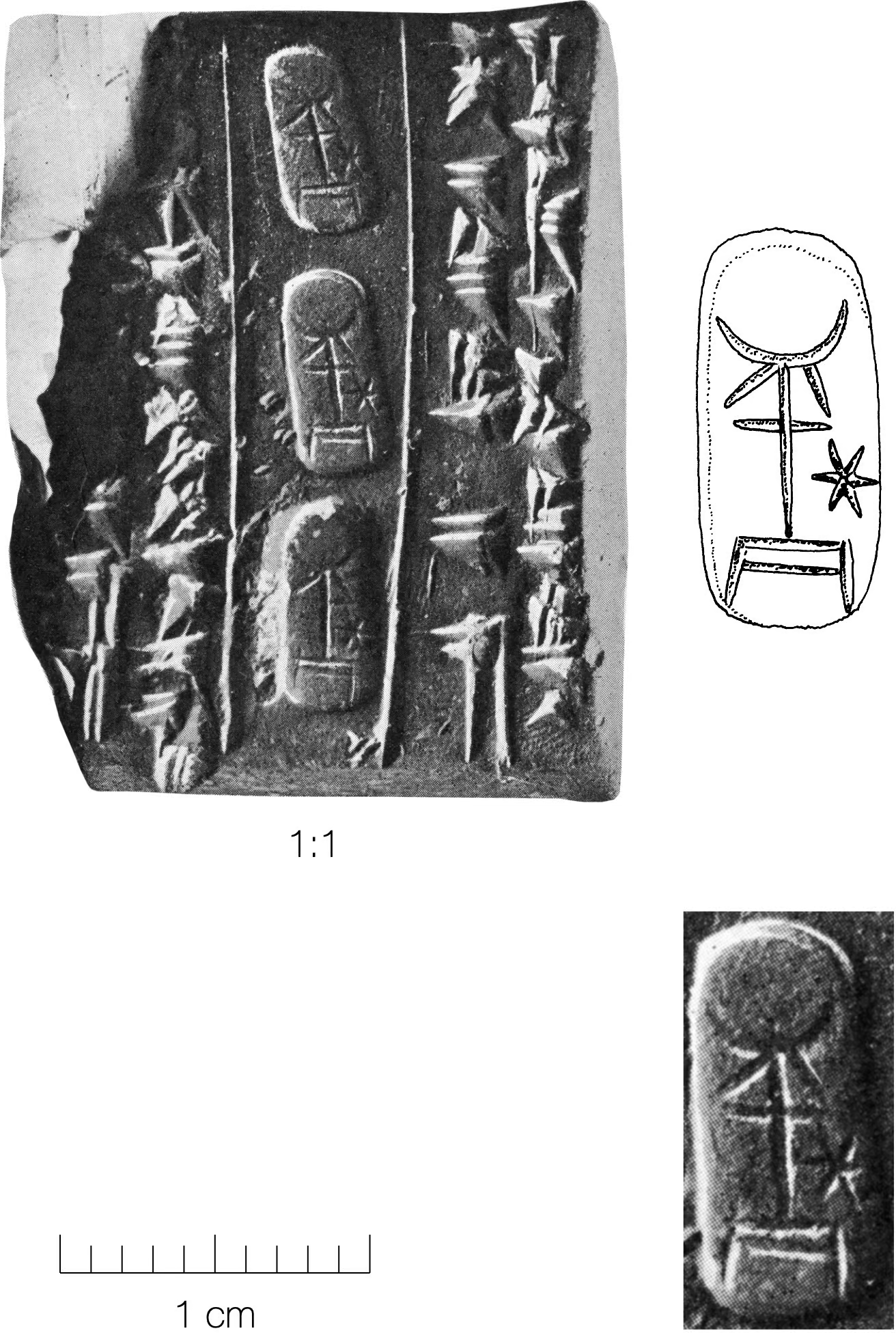
Tel Gezer seal impression on a clay tablet bearing the crescent standard. Credit: Ido Koch, CSSL Gezer No. 3.
Although the seal’s face is somewhat worn, its composition belongs to a well-known iconographic tradition that spread throughout the Neo-Assyrian Empire during the eighth and seventh centuries BCE. Similar lunar emblems appear on other seals and administrative documents across Assyrian-controlled territories. A close regional parallel comes from nearby Tel Gezer, where a seventh-century BCE clay tablet bears an impression of the same moon-god symbol (pictured at right).
For readers of the Bible, the appearance of the crescent standard is especially interesting. Sin’s principal cult center was located at Harran in northern Mesopotamia. Harran is familiar from Genesis as the place where Abraham’s family settled before continuing toward Canaan (Genesis 11:31–32). The seal does not shed light on the patriarchal narrative (it is far too late), but it does demonstrate that Harran remained an influential religious center centuries later and that its symbols circulated widely throughout the Assyrian Empire.
In Mesopotamian religious thought, the moon god occupied an important place. Known as Nanna in Sumerian and Sin in Akkadian, he was revered as ruler of the night sky, measurer of time, source of wisdom, and father to both the sun god Shamash and the goddess of Venus Ishtar. By the Neo-Assyrian period, the cult of Sin had become closely associated with imperial ideology, especially under the Sargonid kings. Sin’s crescent standard variously symbolized divine protection, cosmic order, and royal legitimacy.
This backdrop may also illuminate biblical concerns about the worship of celestial bodies. Several biblical authors criticized devotion directed toward the sun, moon, and stars. The reforms attributed to King Josiah in 2 Kings 23, for example, specifically targeted forms of astral worship. The Tel Hadid seal does not prove that local inhabitants worshiped Sin, but does provide evidence that imagery associated with Mesopotamian lunar religion circulated within the same cultural landscape.
Overall, the seal brings together an extraordinary combination of material, technology, and symbolism. An exotic shell imported from distant waters was shaped using sophisticated manufacturing techniques and engraved (in the Levant?) with an emblem linked to one of Assyria’s most important deities. Found in a settlement reshaped by imperial conquest and administration, this small object reflects the interconnected world behind some of the Bible’s most formative centuries. Rather than a clear divide between Israelite and foreign culture, such artifacts show that people in the biblical world lived amid imported goods, imperial officials, and overlapping religious and artistic traditions.
Lauren K. McCormick is an assistant editor at Biblical Archaeology Review and a specialist in ancient Near Eastern religions, visual culture, and the Bible. She holds degrees in religion from Syracuse University, Duke University, New York University, and Rutgers University, and completed a postdoctoral fellowship on religion and the public conversation at Princeton University.
Become a BAS All-Access Member Now!
Read Biblical Archaeology Review online, explore 50 years of BAR, watch videos, attend talks, and more

Related reading in Bible History Daily
All-Access members, read more in the BAS Library
An Eighth-Century “First”: God’s Name Found On A Hebrew Seal
Not a BAS Library or All-Access Member yet? Join today.
Related Posts


Jun 3
Excavating Banias
May 31
Making Sense of Kosher Laws


Must-Read Free eBooks


Unlock Unlimited Access to the Bible's Past

Unlock Unlimited Access to the Bible's Past
Become an All-Access Member to explore the Bible's rich history. Get Biblical Archaeology Review in print, full online access, and FREE online talks. Plus, enjoy special Travel/Study discounts. Don't miss out—begin your journey today!
