


The Quest for the Historical Paul
James Tabor considers Biblical and external accounts of the apostle
This article was originally published in November 2012 on Dr. James Tabor’s popular Taborblog, a site that discusses and reports on “‘All things biblical’ from the Hebrew Bible to Early Christianity in the Roman World and Beyond.” Bible History Daily republished the article in 2012, with consent of the author. Visit Taborblog or scroll down to read a brief bio of James Tabor.
What can we reliably know about Paul and how can we know it? As is the case with Jesus, this is not an easy question. Historians have been involved in what has been called the “Quest for the Historical Jesus” for the past one hundred and seventy-five years, evaluating and sifting through our sources, trying to determine what we can reliably say about him.[i] As it happens, the quest for the historical Paul began almost simultaneously, inaugurated by the German scholar Ferdinand Christian Baur.[ii] Baur put his finger squarely on the problem: There are four different “Pauls” in the New Testament, not one, and each is quite distinct from the others. New Testament scholars today are generally agreed on this point.[iii]

Ferdinand Christian Baur (1792-1860)
Thirteen of the New Testament’s twenty-seven documents are letters with Paul’s name as the author, and a fourteenth, the book of Acts, is mainly devoted to the story of Paul’s life and career—making up over half the total text.[iv] The problem is, these fourteen texts fall into four distinct chronological tiers, giving us our four “Pauls”:
- Authentic or Early Paul: 1 Thessalonians, Galatians, 1 and 2 Corinthians, Romans, Philippians, and Philemon (50s-60s A.D.)
- Disputed Paul or Deutero-Pauline: 2 Thessalonians, Ephesians, Colossians (80-100 A.D.)
- Pseudo–Paul or the Pastorals: 1 and 2 Timothy, Titus (80-100 A.D.)
- Tendentious or Legendary Paul: Acts of the Apostles (90-130 A.D.)
Though scholars differ as to what historical use one might properly make of tiers 2, 3, or 4, there is almost universal agreement that a proper historical study of Paul should begin with the seven genuine letters, restricting one’s analysis to what is most certainly coming from Paul’s own hand. This approach might sound restrictive but it is really the only proper way to begin. The Deutero-Pauline letters, and the Pastorals reflect a vocabulary, a development of ideas, and a social setting that belong to a later time.[v] We are not getting Paul as he was, but Paul’s name used to lend authority to the ideas of later authors who intend for readers to believe they come from Paul. In modern parlance we call such writings forgeries, but a more polite academic term is pseudonymous, meaning “falsely named.”

Those more inclined to view this activity in a positive light point to a group of followers of Paul, some decades after his death, who wanted to honor him by continuing his legacy and using his name to defend views with which they assumed he would have surely agreed. A less charitable judgment is that these letters represent an attempt to deceive gullible readers by authors intent on passing on their own views as having the authority of Paul. Either way, this enterprise of writing letters in Paul’s name has been enormously influential, since Paul became such a towering figure of authority in the church.
The Pastorals (1 and 2 Timothy and Titus) are not included in our earliest extant collection of Paul’s letters, the so-called Chester Beatty papyrus, that dates to the third century A.D.[vi] Paul’s apocalyptic urgency, so dominant in the earlier letters, is almost wholly absent in these later writings. Among the Deutero-Pauline tier, 2 Thessalonians was specifically written to calm those who were claiming that the day of judgment was imminent—the very thing Paul constantly proclaimed (2 Thessalonians 2:1-3).
In tiers 2 and 3 the domestic roles of husbands, wives, children, widows, masters, and slaves are specified with a level of detail uncharacteristic of Paul’s ad hoc instructions in his earlier letters (Ephesians 5:21-6:9; Colossians 3:18-4:1; 1 Timothy 5:1-16). Specific rules are set down for the qualifications and appointment of bishops and deacons in each congregation (1 Timothy 3:1-13; Titus 1:5-9). There is a strong emphasis on following tradition, respecting the governmental authorities, handling wealth, and maintaining a respectable social order (2 Thessalonians 2:15; 3:6-15; 1 Timothy 2: 1-4; 5:17-19; 6:6-10; Titus 3:1). The Pastorals, in particular, are essentially manuals for church officers, intended to enforce order and uniformity.
Some have argued that the passing of time and the changing of circumstances might account for the differences, but detailed studies of the commonly used vocabulary in Paul’s undisputed letters, in contrast to the Deutero-Pauline and Pastoral letters, has settled the question for most scholars. I will make little use of these later documents in trying to reconstruct the “historical Paul.”
Our website, blog and email newsletter are a crucial part of Biblical Archaeology Society's nonprofit educational mission
This costs substantial money and resources, but we don't charge a cent to you to cover any of those expenses.
If you'd like to help make it possible for us to continue Bible History Daily, BiblicalArchaeology.org, and our email newsletter please donate. Even $5 helps:

The book of Acts, tier 4, presents a special problem in that it offers fascinating biographical background on Paul not found in his genuine letters as well as complete itineraries of his travels. The problem, as I mentioned in the Introduction, is with its harmonizing theological agenda that stresses the cozy relationship Paul had with the Jerusalem leaders of the church and its over-idealized heroic portrait of Paul. Many historians are agreed that it merits the label “Use Sparingly with Extreme Caution.” As a general working method I have adopted the following three principles:
- Never accept anything in Acts over Paul’s own account in his seven genuine letters.
- Cautiously consider Acts if it agrees with Paul and one can detect no obvious biases.
- Consider the independent data Acts provides of interest but not of interpretive historical use.
This latter principle would include biographical information, the three accounts of Paul’s conversion that the author provides, the various speeches of Paul, his itinerary, and other such details.[vii]
Before applying these principles here is a skeletal outline of Paul’s basic biographical data drawn only from his genuine letters that gives us a solid place to begin. Here is what we most surely know:
- Paul calls himself a Hebrew or Israelite, stating that he was born a Jew and circumcised on the eighth day, of the Jewish tribe of Benjamin (Philippians 3:5-6; 2 Corinthians 11:22).
- He was once a member of the sect of the Pharisees. He advanced in Judaism beyond many of his contemporaries, being extremely zealous for the traditions of his Jewish faith (Philippians 3:5; Galatians 1:14).
- He zealously persecuted the Jesus movement (Galatians 1:13; Philippians 3:6; 1 Corinthians 15:9).
- Sometime around A.D. 37 Paul had a visionary experience he describes as “seeing” Jesus and received from him his Gospel message as well as his call to be an apostle to the non-Jewish world (1 Corinthians 9:2; Galatians 1:11-2:2).
- He made only three trips to Jerusalem in the period covered by his genuine letters; one three years after his apostolic call when he met Peter and James but none of the other apostles (around A.D. 40); the second fourteen years after his call (A.D. 50) when he appeared formally before the entire Jerusalem leadership to account for his mission and Gospel message to the Gentiles (Galatians 2:1-10), and a third where he was apparently arrested and sent under guard to Rome around A.D. 56 (Romans 15:25-29).
- Paul claimed to experience many revelations from Jesus, including direct voice communications, as well as an extraordinary “ascent” into the highest level of heaven, entering Paradise, where he saw and heard “things unutterable” (2 Corinthians 12:1-4).
- He had some type of physical disability that he was convinced had been sent by Satan to afflict him, but allowed by Christ, so he would not be overly proud of his extraordinary revelations (2 Corinthians 12:7-10).
- He claimed to have worked miraculous signs, wonders, and mighty works that verified his status as an apostle (2 Corinthians 12:12).
- He was unmarried, at least during his career as an apostle (1 Corinthians 7:8, 15; 9:5; Philippians 3:8).[viii]
- He experienced numerous occasions of physical persecution and deprivation including beatings, being stoned and left for dead, and shipwrecked (1 Corinthians 3:11-12; 2 Corinthians 11:23-27).
- He worked as a manual laborer to support himself on his travels (1 Corinthians 4:12; 1 Thessalonians 2:9; 1 Corinthians 9:6, 12, 15).
- He was imprisoned, probably in Rome, in the early 60s A.D. and refers to the possibility that he would be executed (Philippians 1:1-26).
This is certainly not all we would want but it is all we have, and considering that we have not a single line written by Jesus or any of his Twelve apostles, having seven of Paul’s genuine letters is a poverty of riches.[ix]
The book of Acts provides the following independent biographical information not found in the seven genuine letters:
- Paul’s Hebrew name was Saul and he was born in Tarsus, a city in the Roman province of Cilicia, in southern Asia Minor or present-day Turkey (Acts 9:11, 30; 11:25; 21:39; 22:3)
- He came from a family of Pharisees and was educated in Jerusalem under the most famous Rabbi of the time, Gamaliel. He also had a sister and a nephew that lived in Jerusalem in the 60s A.D. (Acts 22:3; 23:16)
- He was born a Roman citizen, which means his father also was a Roman citizen. (Acts 16:37; 22:27-28; 23:27)
- He had some official status as a witness consenting to the death of Stephen, the first member of the Jesus movement executed after Jesus (Acts 7:54-8:1). He received an official commission from the high priest in Jerusalem to travel to Damascus in Syria to arrest, imprison, and even have executed any members of the Jesus movement who had fled the city under persecution. It was on the road to Damascus that he had his dramatic heavenly vision of Jesus, who commissioned him as the apostle to the Gentiles. (Acts 9:1-19; 22:3-11; 26:12-18).
- He worked by trade as a “tentmaker,” though the Greek word used probably refers a “leather worker” (Acts 18:3).
Become a BAS All-Access Member Now!
Read Biblical Archaeology Review online, explore 50 years of BAR, watch videos, attend talks, and more

So what should we make of this material from the book of Acts?
That Paul’s Hebrew name was Saul we have no reason to doubt, or that he was from Tarsus in Cilicia, though he never mentions this in his letters. Paul says he is of the tribe of Benjamin, and Saul, the first king of Israel, was also a Benjaminite, so one could see why a Jewish family would choose this particular name for a favored son (1 Samuel 9:21). Since Paul reports that he regularly did manual labor to support himself, and Jewish sons were normally taught some trade to supplement their studies, it is possible he was trained as a leather-worker. There is an early rabbinic saying that “He who does not teach his son a trade teaches him banditry.”[x]
Whether Paul was born in Tarsus one has to doubt since Jerome, the fourth century Christian writer, knew a different tradition. He says that Paul’s parents were from Gischala, in Galilee, a Jewish town about twenty-five miles north of Nazareth, and that Paul was born there.[xi] According to Jerome, when revolts broke out throughout Galilee following the death of Herod the Great in 4 B.C., Paul and his parents were rounded up and sent to Tarsus in Cilicia as part of a massive exile of the Jewish population by the Romans to rid the area of further potential trouble. Since Jerome certainly knew Paul’s claim, according to the book of Acts, to have been born in Tarsus, it is very unlikely he would have contradicted that source without good evidence. Jerome’s account also provides us with the only indication we have as to Paul’s approximate age. Like Jesus, he would have had to have been born before 4 B.C., though how many years earlier we cannot say. This fits rather nicely with Paul’s statement in one of his last letters to a Christian named Philemon, written around A.D. 60, where he refers to himself as a “old man” (Greek presbytes), a word that implies someone who is in his 60s.[xii]
Jerome’s account casts serious doubt on the claim in Acts that Paul was born a Roman citizen. We have to question whether a native Galilean family, exiled from Gischala as a result of anti-Roman uprisings in the area, would have had Roman citizenship. We know that Gischala was a hotbed of revolutionary activity and John of Gischala was one of the most prominent leaders in the first Judean Revolt against Rome (A.D. 66-70).[xiii] Paul also says that he was “beaten three times with rods” (2 Corinthians 11:25). This is a punishment administered by the Romans and was forbidden to one who had citizenship.[xiv] The earliest document we have from Paul is his letter 1 Thessalonians. It is intensely apocalyptic, with its entire orientation on preparing his group for the imminent arrival of Jesus in the clouds of heaven (1 Thessalonians 1:10; 2:19; 3:13; 4:13-18; 5:1-5, 23). One might imagine Paul the former Pharisee with no apocalyptic orientation whatsoever, but it is entirely possible, if Jerome is correct about his parents being exiled from Galilee in an effort to pacify the area, that Paul’s apocalyptic orientation was one he derived from his family and upbringing. Luke-Acts tends to mute any emphasis on an imminent arrival of the end and he characteristically tones down the apocalyptic themes of Mark, his main narrative source for his Gospel.[xv]
Acts is quite keen on emphasizing Paul’s friendly relations with Roman officials as well as the protection they regularly offered Paul from his Jewish enemies, so claiming that Paul was a Roman citizen, and putting his birth in a Roman Senatorial province like Cilicia, serves the author’s purposes.
Acts’s claim that Paul grew up in Jerusalem and was a personal student of the famous rabbi Gamaliel is also highly suspect. The book of Acts has an earlier scene, when the apostles Peter and John are arrested by the Jewish authorities who are threatening to have them killed, in which Gamaliel stands up in the Sanhedrin court and speaks in their behalf, recommending their release (Acts 5:33-39). The story is surely fictitious and is part of the author’s attempt to indicate to his Roman audience that reasonable minded Jews, like noble Roman officials, did not condemn the Christians. It is likely that the author of Acts, in making Paul an honored student of Gamaliel, the most revered Pharisee of the day, is wanting to further advance this perspective. Throughout his account he constantly characterizes the Jewish enemies of Paul as irrational and rabid, in contrast to those “good” Jews who are calm, reasonable, and respond favorably to Paul (Acts 13:45; 18:12; 23:12).
Whether Paul even lived in Jerusalem before his visionary encounter with Christ could be questioned. In Acts it is a given, but Paul never indicates in any of his letters that Jerusalem was his home as a young man. He does mention twice a connection with Damascus, the capital of the Roman province of Syria (2 Corinthians 11:32; Galatians 1:17). Whether he was in Damacus, which is 150 miles northwest of Jerusalem, in pursuit of Jesus’ followers, or for other reasons, we have no sure way of knowing. The account in Acts of Paul’s conversion, repeated three times, that has Paul sent as an authorized delegate of the High Priest in Jerusalem to arrest Christians in Damascus, has so colored our assumptions about Paul that it is hard to focus on what we find in his letters.
Paul connection to Jerusalem, or the lack thereof, has much to do with the oft-discussed question of whether Paul would have ever seen or heard Jesus, or could he have been a witness to Jesus’ crucifixion in A.D. 30. Since he never mentions seeing Jesus in any of his letters, and one would expect that had he been an eyewitness to the events of that Passover week he surely would have drawn upon such a vivid experience, this argues against the idea that he was a Jerusalem resident at that time.
Likewise, Paul’s high placed connections to the Jewish priestly class in Jerusalem we can neither confirm nor deny. All he tells us is that he zealously persecuted the church of God and tried to destroy it (Galatians 1:12). Some translations have used the English word “violently,” but this is misleading and serves to reinforce the account in Acts that Paul was delivering people over to execution. The Greek word Paul uses (huperbole) means “excessively” or zealously. We take Paul’s word that he identified himself as a Pharisee, but there is nothing in his letters to indicate the kind of prominent connections that the author of Acts gives him.
Outside the New Testament
Our earliest physical description of Paul comes from a late second-century Christian writing The Acts of Paul and Thecla. It is a wildly embellished and legendary account of Paul’s travels, his wondrously miraculous feats, and his formidable influence in persuading others to believe in Christ. The story centers on the beautiful and wealthy virgin Thecla, a girl so thoroughly mesmerized by Paul’s preaching that she broke off her engagement to follow Paul and experienced many adventures. As Paul is first introduced one of his disciples sees him coming down the road:
And he saw Paul coming, a man small of stature, with a bald head and crooked legs, in a good state of body, with eyebrows meeting and nose somewhat hooked, full of friendliness; for now he appeared like a man, and now he had the face of an angel.[xvi]
We have no reason to believe this account is based on any historical recollection since the Acts of Paul as a whole shows no trace of earlier sources or historical reference points. The somewhat unflattering portrait most likely stemmed from allusions in Paul’s letters to his “bodily presence” being unimpressive and the subject of scorn, whereas his followers received him as an angel (2 Corinthians 10:10; Galatians 4:13-14).
It might come as a surprise, but outside our New Testament records we have very little additional historical information about Paul other than the valuable tradition that Jerome preserves for us that he was born in the Galilee. The early Christian writers of the second century (usually referred to as the “Apostolic Fathers”) mention his name less than a dozen times, holding him up as an example of heroic faith, but nothing of historical interest is related by any of them. For example, Ignatius, the early second century bishop of Antioch writes:
For neither I nor anyone like me can keep pace with the wisdom of the blessed and glorious Paul, who, when he was among you in the presence of the men of that time, accurately and reliably taught the word concerning the truth.[xvii]
Some of the second and third century Christian writers know the tradition that both Peter and Paul ended up in Rome and were martyred during the reign of the emperor Nero—Paul was beheaded and Peter was crucified.[xviii] The apocryphal Acts of Peter, an extravagantly legendary account dating to the third or fourth century A.D., explains that Peter insisted on being crucified upside-down so as to show his unworthiness to die in the same manner as Jesus.[xix]
Ironically it seems that we moderns, using our tools of critical historical research, are in a better position than the Christians of the second and third centuries to recover a more authentic Paul.
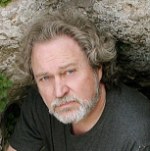 Dr. James Tabor is Chair of the Department of Religious Studies at the University of North Carolina at Charlotte where he is professor of Christian origins and ancient Judaism. Since earning his Ph.D. at the University of Chicago in 1981, Tabor has combined his work on ancient texts with extensive field work in archaeology in Israel and Jordan, including work at Qumran, Sepphoris, Masada and Wadi el-Yabis in Jordan. Over the past decade he has teamed up with with Shimon Gibson to excavate the “John the Baptist” cave at Suba, the “Tomb of the Shroud” discovered in 2000, Mt Zion and, along with Rami Arav, he has been involved in the re-exploration of two tombs in East Talpiot including the controversial “Jesus tomb.” Tabor’s latest book is Paul and Jesus: How the Apostle Transformed Christianity. You can find links to all of Dr. Tabor’s web pages, books and projects at jamestabor.com.
Notes
[i] The Quest was given both its history and its name by Albert Schweitzer, whose groundbreaking book, published in 1906 with the nondescript German title, Von Reimarus zu Wrede (from Reimarus to Wrede), was given the more provocative title in English, The Quest of the Historical Jesus, translated by William Montgomery (London: Adam & Charles Black, 1910).
[ii] The beginning of the modern Jesus Quest is usually dated to around 1835 with the publication of David Strauss’s Life of Jesus. The full German title of Strauss’s work, Das Leben Jesu kritisch bearbeitet (Tübingen: 1835-1836) was published in English as The Life of Jesus, Critically Examined (3 vols., London, 1846), translated by George Eliot, the penname of British novelist Mary Ann Evans. Baur’s major work, Paulus, der Apostel Jesu Christi, sein Leben und Wirken, seine Briefe und seine Lehre (Paul the Apostle of Jesus Christ: His Life and Works, His Letters and His Teaching) was published in1845. Strauss was a student of Baur at the University of Tübingen.
[iii] Most recently, Marcus Borg and John Dominic Crossan, The First Paul: Reclaiming the Radical Visionary Behind the Church’s Conservative Icon (New York: HarperOne, 2009). A more conservative, but nonetheless critical treatment relying more on the letters of Paul than the book of Acts is that of Jerome Murphy-O’Conner, Paul: A Critical Life (New York: Oxford University Press, 1996).
[iv] An English copy of the New Testament, Revised Standard Version, with text only and no notes or references, runs 284 pages total. The thirteen letters attributed to Paul, plus the book of Acts, add up to 109 pages of the total—just over one-third.
[v] See Bart Ehrman’s summary analysis “In the Wake of the Apostle: The Deutero-Pauline and Pastoral Epistles,” in The New Testament: A Historical Introduction to the Early Christian Writings, 4th ed. (New York: Oxford University Press, 2008), pp. 272-394.
[vi] “Chester Beatty Papyri” in Anchor Bible Dictionary, Vol. 1 (New York: Doubleday, 1992), pp. 901-903.
[vii] Not only was the composition of such speeches common in Greek literary histories, it was expected. Thucydides, in his History of the Peloponnesian war, says that he composed speeches according to “what was called for in each situation” ( 1. 22. 2). Josephus, a contemporary of the author of Acts, is a prime example; see Henry Cadbury, The Making of Luke-Acts (New York: Macmillan Company, 1927), and Arthur J. Droge and James D. Tabor, A Noble Death: Suicide and Martyrdom Among Christians and Jews in Antiquity (New York: HarperCollins, 1992), pp. 53-112.
[viii] It is possible that Paul was once married since he says he advanced within Judaism beyond his peers. Jewish men his age would normally marry; not to marry would be considered abnormal. In his letters he speaks of the “loss of all things” and also refers to a situation where an “unbelieving wife” might leave one who has joined his movement, so it is possible he is alluding to his own personal situation since he says the brother or sister, so abandoned, should not feel obligated to heed Jesus’ teaching that there can be no divorce for any cause (Philippians 3:7; 1 Corinthians 7:12-16).
[ix] The letter of James and Jude might be exceptions though many scholars question if these two brothers of Jesus were part of the Twelve and others questions the authenticity of the letters themselves. Few scholars consider the letters of 1 and 2 Peter as written by Peter. 1 Peter, in particular, is surprisingly “Pauline” in tone and content and fits nothing we know of Peter based on more reliable sources—including Paul’s genuine letters. The letters of John are not from John the fisherman, one of the Twelve, but from a later John, sometimes referred to as “John the Elder,” who lived in Asia Minor (see Eusebius, Church History 3.39.4-7).
[x] Pirke Avot 2. 3.
[xi] Jerome, De Virus Illustribus (PL 23, 646).
[xii] See Jerome Murphy-O’Conner, Paul: A Critical Life, pp. 1-5. The translation “ambassador,” found in the Revised Standard Version, is conjectural, with no manuscript support. It assumes the misspelling of the Greek word “ambassador” (presbeutes), as “elder” (presbytes), but “elder” is the reading in all our manuscripts. The New Revised Standard Version and New Jerusalem Bible correctly have “elder.”
[xiii] Josephus, Jewish War 7. 263-265. Josephus mentions John of Gischala often in his history of the revolt.
[xiv] See Digest 48. 6-7, a compendium of Roman law in The Digest of Justinian, ed. T. Mommsen, translated by A. Watson (Philadelphia: Pennsylvania State University Press, 1985).
[xv] A comparison of Mark 13, sometimes called the “Synoptic Apocalypse,” or the “Little Apocalypse,” with Luke 21, which is the author’s rewriting of Mark, one sees how the “end of the age” is indefinitely extended and no longer tied to the Jewish-Roman war of A.D. 66-74.
[xvi] Translation by Wilhelm Schneemelcher in Edgar Hennecke’s New Testament Apocrypha, edited by William Schneemelcher, translated by R. McL. Wilson, volume 2 (Philadelphia: Westminster Press, 1965), pp. 353.
[xvii] Ignatius, Philippians 3:2.
[xviii] See Eusebius, Church History 2. 14. 5-6 and 3.1.2, who says he is relying on Origen, an early third century Christian theologian.
[xix] An expanded legendary account is found in the apocryphal Acts of Peter 37-38.
Related reading in Bible History Daily
Paul’s First Missionary Journey through Perga and Pisidian Antioch
All-Access members, read more in the BAS Library
Not a BAS Library or All-Access Member yet? Join today.
Related Posts




Must-Read Free eBooks


Unlock Unlimited Access to the Bible's Past

Unlock Unlimited Access to the Bible's Past
Become an All-Access Member to explore the Bible's rich history. Get Biblical Archaeology Review in print, full online access, and FREE online talks. Plus, enjoy special Travel/Study discounts. Don't miss out—begin your journey today!

Saul the Pervert, the first False Messiah. He was was never a Pharisee or taught by Gamaliel, nor was he an Apostle. He never knew Yeshua bar Yosef, and never tried to even learn the least bit about him. He cared not about the person Yeshua or his life. He cared only about his resurrected and glorious Jesus Christ, and his own glory as well. He was a man out to make a name for himself .
• Paul calls himself a Hebrew or Israelite, stating that he was born a Jew and circumcised on the eighth day, of the Jewish tribe of Benjamin (Philippians 3:5-6; 2 Corinthians 11:22) …….. It is easy to claim to be a Hebrew or an Israelite before and audience of Gentiles, but he never makes this claim before James and the Apostles in Jerusalem does he ??
• He claims he was once a member of the sect of the Pharisees, and advanced in Judaism beyond many of his contemporaries …….. If he was so advanced in Judaism beyond many of his contemporaries, then his name would have been well known, yet no where in the Synoptic Gospels do we hear of him. We hear nothing of him in any of the Jewish writings either. He was an associate of the High Priest and worked for and with him persecuting the followers of Yeshua, yet the Pharisee’s (as Saul claims to be) and the Sadducee’s (the Priestly class) were enemies, agreeing on nothing.
Saul (Paul) makes many claims:
• Sometime around A.D. 37 Paul [claims to have] had a visionary experience he describes as “seeing” Jesus and received from him his Gospel message as well as his call to be an apostle to the non-Jewish world (1 Corinthians 9:2; Galatians 1:11-2:2) ……. IF he had a visionary experience, who he “saw” was Lucifer, not Yeshua. Lucifer is a Fallen Angel yes, but an Angel none the less. He can appear to anyone, and in any form he so chooses. He is the Great Deceiver and the Lord of Lies. It is also made perfectly clear that the only Apostle to the Gentiles was Kepha (Peter).
• Paul claimed to experience many revelations from Jesus, including direct voice communications, as well as an extraordinary “ascent” into the highest level of heaven, entering Paradise, where he saw and heard “things unutterable” (2 Corinthians 12:1-4) ……. Yes, he “claimed to”, and who but him could verify it ? Of course he heard “things unutterable” when he ascended into the highest level of heaven, entering Paradise. How wonderfully convenient for him, he couldn’t tell anyone what he saw and heard because they were “unutterable.” If he had told anyone, those things would have been as false as his entire story was !!
• He claimed to have worked miraculous signs, wonders, and mighty works that verified his status as an apostle (2 Corinthians 12:12) ……. Once again ” he claims” but where is the verification for these ? And he might as well “verify his status as an Apostle” because no one else did !! The only claim to be an Apostle came from him. James and the Apostle’s in Jerusalem never said he was, and they were the Leaders of the movement !!
I did this, I did that, I saw this, I saw that, I heard this, I heard that, I am this, I am that. Two hundred times or more you hear in his writings the word “I”, well when you are egotistical and wanting to make a name for yourself, “I” comes in handy !!
Romans 16:25 ..Now to him that is of power to establish you according to my gospel, and the preaching of Jesus Christ, according to the revelation of the mystery, which was kept secret since the world began ……. “MY Gospel”, yes it most certainly was, as it was no one else’s let alone Yeshua’s !! … “revelation of the mystery”, only pagan religions had “revelations of the mysteries’, and those things “kept secret since the world began.” Yeshua never taught mysteries, he taught the Word of G-D, he taught the Torah !!!
Dr, Tabor wishes to throw doubt on the Epistle’s of James and Jude because “many scholars question if these two brothers of Jesus were part of the Twelve and others questions the authenticity of the letters themselves” ……. Yet neither James or Jude ever claimed to be among the Twelve. The Twelve were the Disciples of Yeshua that we all know. James and Jude are two of Yeshua’s brothers. Upon the death of Yeshua, who had been proclaimed and anointed King of the Jews, the Royal mantle fell upon his next oldest brother Ya’akov (James). This is why he became the acknowledged head of the Jerusalem “Church”, ie: “The Way”, as the followers of Yeshua became known. And every one of them followed the Hebraic religion, which was what Yeshua taught the return to, from Judaism.
Judaism and the Hebraic religion are two different things. Judaism follows the writing in the Babylonian Talmuds, the Torah takes second place after them. The Hebraic religion is based entirely on the Torah, and the Torah alone. The Pharisee’s were followers of Judaism (Jewish religion), and their teachings were based on the Babylonian Talmuds. This is why you find Yeshua vehemently opposed to the Pharisee’s and their teachings.
If you do not believe me on this, then check it out. The leading Rabbi’s have stated it plain and simple, “The Jewish religion is not the same religion as that of the Israelites “
you say””Gamaliel stands up in the Sanhedrin court and speaks in their behalf, recommending their release (Acts 5:33-39). The story is SURELY fictitious and is part of the author’s attempt to indicate to his Roman audience that reasonable minded Jews””
SURELY? Imagine that…a physic..a prophet, or better.
This is pride dressed up as Scholarship. There is only one purpose of statements like these. I am all knowing—look at me. Its an incredibly powerful thing to pronounce a 2000 year old writing surely made up from your little desk. But then if you didnt..none of your unbeliever elite would pay any attention to you. When you receive your accolades and pay check..you have been paid in full.
yours surely,
an ignorant fool who thinks pretending to know what happened 2000 years ago while eating pizza is a fools errand. After all, we dont even know for sure the events surrounding The Kennedy and Lincoln assassinations even tough they are a stones throw away in history. But you somehow know thousand of years before with perfect clarity. Its laughable.
How inane. When one writes “it is very unlikely he (Jerome) would have contradicted that source without good evidence” I’m not sure how any serious scholar can read suggest that ANYTHING in this article can be taken seriously. The subjective “very unlikely” isn’t even the worst.
Dr. Tabor concludes Paul clearly fictionalized an account of studying under Gamaliel saying “The story is surely fictitious and is part of the author’s attempt to indicate to his Roman audience that reasonable minded Jews, like noble Roman officials, did not condemn the Christians”
Really? It is “surely” fictitious? But then this author cites Ignatious saying: Paul, who, when he was among you in the presence of the men of that time, accurately and reliably taught the word concerning the truth.[xvii]
So Ignatious testifies that Paul “ACCURATELY AND RELIABLY taught the word concerning TRUTH” – but Paul (or his deceiving followers) are lying?
Which is it?
Here’s an idea. Actually LIKE the subject matter you are opining on and follow the instruction of the scripture on how to perceive it’s meaning. As in 1 Corinthians 2:9-11.
Bunch of garbage. There is no tangible reason given in the article whatsoever for why this bizarre division into four groups is used, it’s just the same tired attempt used in the Documentary Hypothesis. And as pointed out excellently by ABR’s Duane Garrett:
“According to the theory, the redactors simply conflated the texts at hand by the ‘scissors-and-paste’ method of cutting up each document and then joining the whole into a continuous narrative. No true analogy to this somewhat bizarre editorial procedure is available.”
https://www.biblearchaeology.org/post/2010/09/24/the-documentary-hypothesis.aspx
Here’s my reason for investigating the historicity of Paul. Paul, according to the Bible, was taught by Gamaliel who was a leader of the Sanhedrin located in Jerusalem. He lived during the three years of Jesus’s mission. He was devout in the traditions of his religion and would surely have at least been in Jerusalem for the feasts. Is it possible for him to have not seen or heard anything about Jesus, who was causing an uproar due to his miracles, confrontation with the money changers in the temple, debating the Jewish elders, etc.? This just doesn’t seem very likely. Yet, ‘Paul’ sites nothing. So what does this mean? I don’t know yet, but it is important due to the differences in the message of ‘Paul’ in contrast to the rest of the New Testament.
For THAT matter, “Paul” cites NOTHING in his epistles about his EQUALLY prominent CONTEMPORARY Apollonius of Tyana the Greco-Roman “Magic Man”, considered the EQUAL of Jesus Christ by pagans and possibly the inspiration for the “New Testament” character of Elymas barJESUS the SORCERER of Cyprus that Paul allegedy confronted,
who STAYED IN TARSUS around the same time and used it as his “base of operations”.
And his disciples took him by night and let him down over the wall, lowering him in a basket. And when he had come to Jerusalem he attempted to join the disciples but they are all afraid of him for they did not believe he was a disciple. But Barnabas took him, and brought him to the apostles, and declared to them how on the road he had seen the Lord, who spoke to him, and how at Damascus he had preached boldly in the name of Jesus. So he went in and out among them at Jerusalem, preaching boldly in the name of the Lord. And he spoke and disputed against the Hellenists; but they were seeking to kill him. And when the brethren knew it, they brought him down to Caesarea and set him off to Tarsus. (Acts 9:25-30)
And (Ananias) . . .said, The God of our fathers appointed you to know his will, to see the Just One and to hear a voice from his mouth; and you will be a witness for him to all men of what you have seen and heard. And now, why do you wait? Rise and be baptized, and wash away your sins, calling on his name. When I returned to Jerusalem and was praying in the temple I fell into a trance and saw him saying to me, ‘Make haste and get quickly out of Jerusalem, because they will not accept your testimony about me. And I said, ‘Lord, they themselves know that in very synagogue I imprisoned and beat those who believed in thee. And when the blood of Stephen thy witness was shed, I also was standing by and approving, and keeping the garments of those who killed him.’ And he said to me, ‘Depart; for I will send you far away to the Gentiles.’ (Acts 22:14-21)
But when he who had set me apart before I was born, and had called me through his grace, was pleased to reveal his Son to me in order that I might preach him among the Gentiles, I did not confer with flesh and blood, nor did I go up to Jerusalem to those who were apostles before me, but I went away into Arabia; and again I returned to Damascus. Then after three years I went up to Jerusalem to visit Cephas, and remained with him fifteen days. But I saw none of the other apostles except James the Lord’s brother. (In what I am writing to you, before God I do not lie!) Then I went into the regions of Syria and Cilicia; and I still was not known by sight to the churches of Christ in Judea; they only heard it said, “He who once persecuted us is now preaching the faith he once tried to destroy. (Galatians 1:15-23)
My conclusion: Paul either had a very poor memory, was mentally ill, or lied about what he did in the weeks, months, and first few years after his conversion experience on the Damascus Road. Yet, Christians base their belief in the Resurrection, the pinnacle event of their faith, on this man’s testimony, which in his own words, was a “heavenly vision” of a talking, bright light…along with the writings of four anonymous first century authors, writing decades after the alleged event, in a foreign language, in far away foreign lands, for purposes we do not and will never know.
That isn’t evidence, folks. That is speculation, superstition, and fantasy.
Paul COULDN’T possibly by all geographical rationality have gone to Damascus on the way to his he was converted and THEN “have gone into” or “went away into Arabia” and THEN “have RETURNED to Damascus” because Damascus IS IN Arabia, and always HAS BEEN geographically; though politically at different times it has been considered “officially” part of Syria. But IT WASN’T at the alleged time of Paul’s visit. It was part of the SEPARATE Nabataean kingdom under Aretas IV who had a district governor stationed there, as the “Acts of the Apostles” mentions. This contradictiveness is one of his idiosyncrasies.
Paul COULDN’T possibly by all geographical rationality have gone to Damascus on the way to which he was converted and THEN “have gone into” or “went away into Arabia” and THEN “have RETURNED to Damascus” because Damascus IS IN Arabia, and always HAS BEEN geographically; though politically at different times it has been considered “officially” part of Syria. But IT WASN’T at the alleged time of Paul’s visit. It was part of the SEPARATE Nabataean kingdom under Aretas IV who had a district governor stationed there, as the “Acts of the Apostles” mentions. This contradictiveness is one of his idiosyncrasies.
Reading through this, it is clear that Saul (his Hebrew name) would appear as an hypocrite on many factors, UNLESS, there are TWO distinctive people (entirely separate) writing of two very separate accounts. Paulos was a Roman citizen, which was authorized by Rome to kill Yahshua’s disciples, and STOP the oncoming rebellion, which this Paulos WOULD NOT HAVE BEEN ALLOWED TO LEARN UNDER THE JEWS OF THE SANHEDRIN, as Jews regarded Gentiles (Romans) as dogs. This Paulos had a ‘conversion,’ for which he turned against Rome, and interacted many tiimes with the apostles (see Acts), who also was a witness of Stephens death.
Then we have Saul who was an Israelite (Benjamite) who studied under Gamliel, who only met the apostles James and Peter thrice, and was shipwrecked on an island where his story ends.
The former was belligerent with Peter, while the latter defended Peter (Kepha). The former taught Gentiles to forsake the ‘traditional teachings of the Jews (Law),’ where the Latter advocated the ‘Law, the prophets, and Yahshua as the Cornerstone.’ Saul wrote the letter to the Hebrews, explaining the importance of the ‘symbolism found within the law, and the ceremonial practices, and the striving of perfection,’ where Paulos outright rejects perfection, claiming that the law is not of necessity among the Gentiles.’
IMHO, this clearly is two separate persons writing two very different accounts, as Saul preached and warned AGAINST hypocrisy (preaching one thing while doing another), where Paulos did no such thing, but appears to contradict the teachings of Yahshua.
“Bearing Thorough Witness” About God’s Kingdom”
Like Paul and Barnabas, may we always remember that our responsibility is to preach the good news. The decision to accept or reject the message rests squarely with our listeners. If those to whom we preach seem unresponsive, we can take a lesson from the first-century disciples. By appreciating the truth and allowing ourselves to be led by holy spirit, we too can be joyful, even in the face of opposition.—Gal. 5:18, 22.
“Go . . . and Make Disciples” “To the Most Distant Part of the Earth”
https://wol.jw.org/en/wol/d/r1/lp-e/1102009079
11 In the first century, many, including some who claimed to be Christians, showed a lack of humility and were stumbled by what the apostle Paul revealed to them about God’s purpose. Paul became “an apostle to the nations,” but it was not because of his nationality, education, age, or long record of fine works. (Romans 11:13) Often, fleshly-minded individuals view these as the factors that determine whom Jehovah should use as his instrument. (1 Corinthians 1:26-29; 3:1; Colossians 2:18) However, Paul was Jehovah’s choice, in harmony with His loving-kindness and righteous purpose. (1 Corinthians 15:8-10) Those whom Paul described as “superfine apostles,” as well as other opposers, refused to accept Paul and his reasoning from the Scriptures. Their lack of humility hindered them from gaining knowledge and understanding of the glorious way Jehovah works out his purpose. May we never underestimate or prejudge those whom Jehovah chooses to use to accomplish his will.—2 Corinthians 11:4-6.
https://wol.jw.org/en/wol/d/r1/lp-e/2004562#h=14:0-14:998