


The Exodus: Fact or Fiction?
Evidence of Israel’s Exodus from Egypt

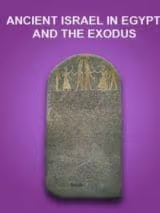
Dated to c. 1219 B.C.E., the Merneptah Stele is the earliest extrabiblical record of a people group called Israel. Set up by Pharaoh Merneptah to commemorate his military victories, the stele proclaims, “Ashkelon is carried off, and Gezer is captured. Yeno’am is made into nonexistence; Israel is wasted, its seed is not.” Ashkelon, Gezer and Yeno’am are followed by an Egyptian hieroglyph that designates a town. Israel is followed by a hieroglyph that means a people. Photo: Maryl Levine.
Is the biblical Exodus fact or fiction?
This is a loaded question. Although biblical scholars and archaeologists argue about various aspects of Israel’s Exodus from Egypt, many of them agree that the Exodus occurred in one form or another.
The question “Did the Exodus happen” then becomes “When did the Exodus happen?” This is another heated question. Although there is much debate, most people settle into two camps: They argue for either a 15th-century B.C.E. or 13th-century B.C.E. date for Israel’s Exodus from Egypt.
The article “Exodus Evidence: An Egyptologist Looks at Biblical History” from the May/June 2016 issue of Biblical Archaeology Review1 wrestles with both of these questions—“Did the Exodus happen?” and “When did the Exodus happen?” In the article, evidence is presented that generally supports a 13th-century B.C.E. Exodus during the Ramesside Period, when Egypt’s 19th Dynasty ruled.
The article examines Egyptian texts, artifacts and archaeological sites, which demonstrate that the Bible recounts accurate memories from the 13th century B.C.E. For instance, the names of three places that appear in the biblical account of Israel’s Exodus from Egypt correspond to Egyptian place names from the Ramesside Period (13th–11th centuries B.C.E.). The Bible recounts that, as slaves, the Israelites were forced to build the store-cities of Pithom and Ramses. After the ten plagues, the Israelites left Egypt and famously crossed the Yam Suph (translated Red Sea or Reed Sea), whose waters were miraculously parted for them. The biblical names Pithom, Ramses and Yam Suph (Red Sea or Reed Sea) correspond to the Egyptian place names Pi-Ramesse, Pi-Atum and (Pa-)Tjuf. These three place names appear together in Egyptian texts only from the Ramesside Period. The name Pi-Ramesse went out of use by the beginning of Egypt’s Third Intermediate Period, which began around 1085 B.C.E., and does not reappear until much later.
These specific place names recorded in the biblical text demonstrate that the memory of the biblical authors for these traditions predates Egypt’s Third Intermediate Period. This supports a 13th-century Exodus during the Ramesside Period because it is only during the Ramesside Period that the place names Pi-Ramesse, Pi-Atum and (Pa-)Tjuf (Red Sea or Reed Sea) are all in use.
A worker’s house from western Thebes also seems to support a 13th-century Exodus. In the 1930s, archaeologists at the University of Chicago were excavating the mortuary Temple of Aya and Horemheb, the last two pharaohs of Egypt’s 18th Dynasty, in western Thebes. The temple was first built by Aya in the 14th-century B.C.E., but Horemheb usurped and expanded the temple when he became pharaoh. (He ruled from the late 14th century through the early 13th century B.C.E.) Horemheb chiseled out every place where Aya’s name had been and replaced it with his own. Later—during the reign of Ramses IV (12th century B.C.E.)—the Temple of Aya and Horemheb was demolished.
During their excavations, the University of Chicago uncovered a house and part of another house belonging to the workers who were tasked with demolishing the temple. The plan of the complete house is the same as that of the four-room house characteristic of Israelite dwellings during the Iron Age. However, unlike the Israelite models that were usually constructed of stone, the Theban house was made of wattle and daub. It is significant that this house was built in Egypt at the same time that Israelites were constructing four-room houses in Canaan. The similarities between the two have caused some to speculate that the builders of the Theban house were either proto-Israelites or a group closely related to the Israelites.

Is this a proto-Israelite house? This plan shows the 12th-century B.C.E. worker’s house in western Thebes next to the Temple of Aya and Horemheb. The house is undoubtedly a four-room house. In Canaan, the four-room house is considered an ethnic marker for the presence of Israelites during the Iron Age. Is the Biblical Exodus fact or fiction? This favors “fact,” so the question becomes, “When did the Exodus happen?” The presence of such a house in Egypt during the 12th century B.C.E. seems to support an Exodus during the Ramesside Period. Photo: Courtesy of Manfred Bietak.
A third piece of evidence for the Exodus is the Onomasticon Amenope. The Onomasticon Amenope is a list of categorized words from Egypt’s Third Intermediate Period. Written in hieratic, the papyrus includes the Semitic place name b-r-k.t, which refers to the Lakes of Pithom. Even in Egyptian sources, the Semitic name for the Lakes of Pithom was used instead of the original Egyptian name. It is likely that a Semitic-speaking population lived in the region long enough that their name eventually supplanted the original.
Watch full-length lectures from the Out of Egypt: Israel’s Exodus Between Text and Memory, History and Imagination conference, which addressed some of the most challenging issues in Exodus scholarship. The international conference was hosted by Calit2’s Qualcomm Institute at UC San Diego in San Diego, CA.
Another compelling piece of evidence for the Exodus is found in the biblical text itself. A history of enslavement is likely to be true. The article explains:
The storyline of the Exodus, of a people fleeing from a humiliating slavery, suggests elements that are historically credible. Normally, it is only tales of glory and victory that are preserved in narratives from one generation to the next. A history of being slaves is likely to bear elements of truth.

Exodus: Fact or fiction? This four-room house from Izbet Sartah, Israel, shares many similarities with the 12th-century B.C.E. worker’s house uncovered in western Thebes. Photo: Israel Finkelstein/Tel Aviv University.
So, is the biblical Exodus fact or fiction? Scholars and people of many faiths line up on either side of the equation, and some say both. Archaeological discoveries have verified that parts of the biblical Exodus are historically accurate, but archaeology can’t tell us everything. Although archaeology can illuminate aspects of the past and bring parts of history to life, it has its limits.
Our website, blog and email newsletter are a crucial part of Biblical Archaeology Society's nonprofit educational mission
This costs substantial money and resources, but we don't charge a cent to you to cover any of those expenses.
If you'd like to help make it possible for us to continue Bible History Daily, BiblicalArchaeology.org, and our email newsletter please donate. Even $5 helps:

It certainly is exciting when the archaeological record matches with the biblical account—as with the examples described here. However, while this evidence certainly adds weight to the historical accuracy of elements of the biblical account, it can’t be used to “prove” that every detail of the Exodus story in the Bible is true.
To learn more about evidence for Israel’s Exodus from Egypt, read the full article “Exodus Evidence: An Egyptologist Looks at Biblical History” in the May/June 2016 issue of Biblical Archaeology Review.
Subscribers: Read the full article “Exodus Evidence: An Egyptologist Looks at Biblical History” in the May/June 2016 issue of Biblical Archaeology Review.
Not a BAS Library or All-Access Member yet? Join today.
This Bible History Daily feature was originally published on April 10, 2016.
Notes
1. This BAR article is a free abstract from Manfred Bietak’s article “On the Historicity of the Exodus: What Egyptology Today Can Contribute to Assessing the Biblical Account of the Sojourn in Egypt” in Thomas E. Levy, Thomas Schneider and William H.C. Propp, eds., Israel’s Exodus in Transdisciplinary Perspective: Text, Archaeology, Culture and Geoscience (Cham: Springer, 2015). In Bietak’s article, the scholarly debate about the archaeological remains and the onomastic data of Wadi Tumilat is more elaborately treated.
Related reading in Bible History Daily
Out of Egypt: Israel’s Exodus Between Text and Memory, History and Imagination
All-Access members, read more in the BAS Library
The Exodus and the Crossing of the Red Sea, According to Hans Goedicke
Not a BAS Library or All-Access Member yet? Join today.
Related Posts


Must-Read Free eBooks



Unlock Unlimited Access to the Bible's Past

Unlock Unlimited Access to the Bible's Past
Become an All-Access Member to explore the Bible's rich history. Get Biblical Archaeology Review in print, full online access, and FREE online talks. Plus, enjoy special Travel/Study discounts. Don't miss out—begin your journey today!

WHEN is the critical question:
“The question “Did the Exodus happen” then becomes “When did the Exodus happen?” This is another heated question. Although there is much debate, most people settle into two camps: They argue for either a 15th-century B.C.E. or 13th-century B.C.E. date for Israel’s Exodus from Egypt.”
The Exodus in 1446 BCE (15th-century B.C.E.) is based on a single eclipse from the Assyrian eponym. The 13th-century B.C.E. date for the Exodus is linked to the reign of Rameses II, simply based on the Bible noting the Israelites built a storage house at a location called Pi-Ramses. But when noted archaeologist Dame Kathleen Kenyon dug up Jericho, she specifically noted that her evidence contradicted these two theories for WHEN the Exodus happened. Her dating for the fall of Jericho between 1350-1325 BCE would necessarily date the Exodus between 1390-1365 BCE (the third quarter of the 14th century B.C.E.), which points to Amenhotep III and Akhenaten. She is thus dismissed in the major discussion even though she is providing the most direct archaeological dating for the Exodus. Her is her quote:
Kathleen Kenyon: Digging Up Jericho, Jericho and the Coming of the
Israelites, page 262:
“As concerns the date of the destruction of Jericho by the Israelites, all
that can be said is that the latest Bronze Age occupation should, in my
view, be dated to the third quarter of the fourteenth century B.C. This is a
date which suits neither the school of scholars which would date the entry
of the Israelites into Palestine to c. 1400 B.C. nor the school which
prefers a date of c. 1260 B.C.”
This agrees with the archaeological dating of David based on the end of the Philistine pottery period in 950 B.C.E. by Israel Finkelstein. If we date David’s reign from 950-910 BCE and Solomon’s reign from 910-870 BCE, then his 4th year in 906 BCE would date the Exodus to 1386 BCE, the end of the reign of Amenhotep III. Akhenaten’s sudden monotheism thus is evidence of the impact of the ten plagues on the Egyptians! Thus you have two archaeological events that coordinate to when we must date the Exodus or at least include as a potential date for the Exodus rather than the popular dates for the Exodus, which lack critical evidence for the Exodus that dating the Exodus at the time of Akhenaten provides. Of course, Akhenaten and his monotheism has often been independently linked to Moses.
Evidence for the Exodus needs to include all potential dates. As noted, it is not IF the Exodus happened but WHEN!
Robert wrote: “Evidence for the Exodus needs to include ALL potential dates.” I can agree on that point. The Jewish Historian, Flavius Josephus, circa 70 AD, wrote a paraphrased history of the Jewish People using the Bible. He associated the Exodus with the Expulsion of the Hyksos by Pharaoh Ahmose I, founder of the 18th Dynasty, circa 1550/1540 BC. His source was a History of Egypt written in Greek by an Egyptian priest called Manetho. Manetho thought the Israelite Exodus was a Ramesside event, not Hyksos. More recently two Egyptologists, Kenneth Kitchen and James Hoffmeir, have concluded that the chronology preserved in the Bible suggests that more than 480 elapsed from the Exodus to the 4th year of King Solomon (1 Kings 6:1). They argue that almost 600 years elapsed, which aligns the Exodus with the Hyksos Expulsion of the mid 16th century BC. Of note, is that the British archaeologist, Dame Kenyon, noted that the last wall of ancient Jericho had been destroyed circa 1550 BC and attributed the city’s fall to Ahmose I (Ahmoses I) and his Egyptian army that pursued after the Hyksos and conquered Canaan. So we have the Bible telling us a story about a people lately come from Egypt, conquering Jericho, and we have Kenyon telling us Jericho’s last walls fell to Egyptians in the Hyksos period. Perhaps the real event behind the Bible’s Exodus story was the Hyksos expulsion? Was Ahmoses I recast as Moses? His cartouche exists in the southern Sinai at the Egyptian shrine dedicated to the cow-goddess Hat-Hor, who gave birth at day break to the sun as a Golden Calf, that became a mature bull at sunset to impregnate his mother Hat-Hor, the sky-goddess in bovine form. She was worshipped with song and dance and drunken revelry. Near her shrine at the base of mountains (Serabit el Khadim) were found shattered stone tablets bearing Canaanite inscriptions (proto-sinatic Script) calling on the god El to protect the Canaanites working the mines with Egyptians. Were these shattered tables recast as the Ten Commandments thrown down by Moses at the sound of worship of the Golden Calf (Hat-Hor’s son)?
I agree with Richard, via hyperbole, and gross exaggeration, God’s mighty deeds are presented in such a way as to “wow” the listeners/readers of the text. Or, to put it another way: “Put the fear of God in the audience.” The trick has worked, witness the millions of Jews, Christians and Moslems, believing in this nonsense for two millennia.
In trying to determine the date of the Exodus scholars combed through ancient documents to see any mention of peoples or places that aligned with the Biblical account. They noted the appearance of the following names: (1) Philistines, (2) Rameses, (3) Pithom, (4) Edom, (5) Seir, (6) Arad, (7) Heshbon, (8) Bozrah, (9) Ai, (10) Hazor. They discovered that Egyptian records noted a tribal group called the PLST, part of the Sea Peoples invasion of Canaan and Egypt in the reign of Rameses 3rd circa 1174 BC. This is the first mention of these people outside the Bible. This suggests an Exodus after 1174 BC as the PLST were not in Canaan before that date and Israel feared the Philistines on her departure from Rameses in Egypt. Pi-Rameses in Egypt has been excavated and it was founded by Rameses I and II in the 1200’s. Bozrah is Buseirah Edom’s capital, and it is no earlier than the 7th century BC. Heshbon (Tell Hesban) is no earlier than the 12th century BC. Hazor fell after 1174 BC as two Philistine sherds were found in its destroyed layer by the Israeli archaeologist Moshe Dothan. Edom is mentioned in an Egyptian document of the Ramesside era (13th century BC) and Seir. Jericho’s last wall was circa 1540 BC and fell to Egyptian forces pursuing the Hyksos from Egypt under Ahmoses I, founder of the 18th dynasty. My conclusions? The Exodus recalls the Hyksos expulsion of circa 1540 BC. But it also combines details from an invasion of Canaan and Transjordan circa 1174 BC or later. I suspect two invasions were recast as one event, the exodus. Why? The second invaders married the conquered peoples (Hyksos descendants) of 1174 BC and thus became heirs to the Hyksos expulsion of 1540 BC.
Yam Suf is not Red Sea or Reed Sea. If you translate the Hebrew it’s Sea of Reeds, in other words, it isn’t nor was it ever the Red Sea
Doesn’t matter, there’s still no evidence of 2 million people wandering the dessert…zero! 2 million people didn’t drop a thing? Didn’t make an imprint?
I thought recent underwater research had located suspect chariots from the exodus abandoned at what would have been a crossing point; could not wood samples of this be used to determine a carbon date for the wood used in construction (assuming that it is not buried extremely deep) in the Red Sea? Also an expert on late night TV, examining their living circumstances, said the Israelites were not slaves, but merely lowly-paid contract workers, Cecil Blount DeMille, not withstanding. Sorry, Cecil. Years ago I learned that Cecil married a remote cousin of mine in Judge Adams daughter in Boston in 1900.
Rob, that was debunked as fake news ages ago. https://www.snopes.com/fact-check/chariot-wheels-found-bottom-red-sea/
How could Moses write anything when Hebrews had no functional written language in 1300BC? Not even down to 1000BC or 800BC do we find any writings at all? Yet if you go with Israel Finkelstein’s anlaysis, top Israeli archaeologist, the Hebrews really emerged by a socio-religious fusion from the Canaanites. WE DO have MANY communications found sent back & forth between Canaanite chiefs & Kings of Egypt.
Why not just admit the obvious instead of trying to prove this complete fairy tale of Moses being true? Its obvious most of this was written centuries after it is supposed to have happened, Jewish scribes at the behest of a king post Babylon exile, to show they had divine claim to the land. Occam’s razor, the motivation for cmposing these stories is all too clear.
Language actually started with the Israelites in Egypt after Joseph and then Jacob/sons arrived.
Also a whole, free city (Avaris) civilization of Semites arrive and grew in the period buried beneath city of Rameses. We have arrival, wealth, slavery period, Hebrew names, Hebrews leaving Egypt, written description of plague effects, invasion of Egypt with no defense, conquering of Canaan. This is all documented in the 15th century, not 13th like the scholars falsely assume.. One cannot base science on assumptions and guess work.
This might help. Watch the dvd “Patterns of Evidence, Exodus” .
This is nonsense. Look at the evidence of 4-room houses which were peculiar to a Semitic group in Egypt and 40 years pop up in the hill country of Israel.
It’s interesting the Minoan empire encountered a catastrophe around 1450BC. It’s proximity to Egypt may help validate the suggested 1450BC Exodus date. Especially if it was a volcanic disaster.
As a Christian, I sincerely believe in the integrity of the scriptures we call the Bible. I believe in the inerrancy of the original manuscripts and, as well, that God does indeed preserve His word from generation to generation. I also believe that the “historical” writings and books of the Bible, (e.g., the books of Kings and Chronicles), are historical, essential, and highly accurate but, not necessarily divinely inspired, (in the sense of infallibility.) Wherever it is written, God said, or an angel of the Lord said, or an instruction is given to a prophet mentioned or recorded in the Bible, that is the infallible “word of God.” English translations are highly accurate but, like the later added chapterization and verse numbering, I do not give the translational work of linguists divine inspiration in the sense of infallibility either – (while I do believe there are “King James Version” only-ists who would argue vehemently otherwise.) Translation work is ongoing, developing and refining itself as more historical context, colloquialisms, and ancient writings are unearthed or otherwise brought to light. Translational work is essential, and God uses it for spreading His message of mercy and grace to all people on this Earth. So, translation is essential but, prayerfully digging for the fullness of meaning in providing the highest accuracy of understanding must be the work of every Theophilus who would want to know the heart and mind of God.
With the above in mind, I firmly believe end-times prophecy of revelations (mysteries and signs) in the heavens above and the earth beneath will bear witness to the integrity of God’s truth. Archeological evidence exists and soon will be unearthed, and published, to prove the Hebrew people’s Exodus from Egypt in an undeniable way, which I also believe will be true for the irrefutable historical evidence of the first and second temples. You doubters can call it hogwash if you like. I believe in a unfathomably wise, intelligent, and living God, who is running the clock of events, (including signs and wonders), to suit His own agenda – not that of those with a stubborn and hard heart, who refuse to believe.
I agree !
The evidence mention in this article is presented in Where Moses Stood- a book which details and reveals cast iron evidence for the Exodus and the work of Moses. Also clear proof for the site of Mount Zion date presence of the Israelites.
It certainly does not, you can’t invent fiction then use said fiction as proof…
These debates need to have a few more guidelines beside simply true or false.
True or false is difficult enough with many of the specifics regarding this matter.
For example: if the time of the Exodus is pushed back from the 1200 BC to three hundred years before and the narrative is fully verbatim, then should the ruler of Egypt be
referred to as Pharaoh? Because it was during the reign of Merneptah, circa same date, that the title was adopted.
Furthermore, geographical Egypt as we see it today was not always united under the same ruler. Upper and Lower Nile had separate rulers in various eras. For some reason the narrative never seems to split hairs about this. The Egypt “over there” is monolithic,
If the documents are as old and verbatim as some proponents claim, then the original account, say, dictated by Moses himself, would reflect the original Egyptian titles and not the one derived.
…Unless subsequent scribes had decided to change the words. For what? For clarity? For whom?
Both Genesis and Exodus do not address these distinctions in the stories about Joseph and Moses. And saying that Israelites were working on construction projects at Pi Ramses only adds to my distress. It seems like something that scribes in Babylonian Captivity would be well acquainted with, especially since where they dwell, clay brick and straw construction projects are typical of a different river valley. So many of the monuments, the products of the Egyptian state were cut of stone. And they were built for centuries by specialist builders, tradesmen, a sort of civil service. Distinct from slavery.
It is as though this is much metaphor for what has happened in Babylonia and the wait for deliverance from there?
The Egyptian state long had a presence far up the eastern Mediterranean coast and its military campaigns well into Syria through Canaan are recorded in stone. Canaanites on the battlegrounds were often taken captive and removed to Egypt. They lived and worked their, but not necessarily in bondage. Fighting at locations like Megiddo and Carchemish, the Egyptian presence in the second millenium BC in these regions is recorded in the Amarna letters. Some of them pose awkward problems for the Exodus. Because, if you set the date wrong, you could have Joshua arriving in the Promised Land while there is still an Egyptian administrator sending reports back to Amarna.
But given that antiquity suffered a widespread catastrophe around 1200 BC, it is clear that numerous peoples or nations were on the go as refugees or as marauders. We have not been able to pull together all the strands of those events. It could well be that the scribes of the 600s and 500s BC pulled together some of what happened centuries before and wrote about it, reflecting the events and lessons of their own time as well.
This process does not end, though. Consider that the pivotal experience of the United States is a civil war about deliverance from slavery with the leader of the abolitionists named Abraham. He is assassinated on Good Friday 1865. at the close of the war but short of the promised land.. Will historians be sceptical about this three millenia from now?