


The Exodus: Fact or Fiction?
Evidence of Israel’s Exodus from Egypt

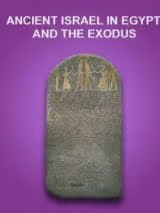
Dated to c. 1219 B.C.E., the Merneptah Stele is the earliest extrabiblical record of a people group called Israel. Set up by Pharaoh Merneptah to commemorate his military victories, the stele proclaims, “Ashkelon is carried off, and Gezer is captured. Yeno’am is made into nonexistence; Israel is wasted, its seed is not.” Ashkelon, Gezer and Yeno’am are followed by an Egyptian hieroglyph that designates a town. Israel is followed by a hieroglyph that means a people. Photo: Maryl Levine.
Is the biblical Exodus fact or fiction?
This is a loaded question. Although biblical scholars and archaeologists argue about various aspects of Israel’s Exodus from Egypt, many of them agree that the Exodus occurred in one form or another.
The question “Did the Exodus happen” then becomes “When did the Exodus happen?” This is another heated question. Although there is much debate, most people settle into two camps: They argue for either a 15th-century B.C.E. or 13th-century B.C.E. date for Israel’s Exodus from Egypt.
The article “Exodus Evidence: An Egyptologist Looks at Biblical History” from the May/June 2016 issue of Biblical Archaeology Review1 wrestles with both of these questions—“Did the Exodus happen?” and “When did the Exodus happen?” In the article, evidence is presented that generally supports a 13th-century B.C.E. Exodus during the Ramesside Period, when Egypt’s 19th Dynasty ruled.
The article examines Egyptian texts, artifacts and archaeological sites, which demonstrate that the Bible recounts accurate memories from the 13th century B.C.E. For instance, the names of three places that appear in the biblical account of Israel’s Exodus from Egypt correspond to Egyptian place names from the Ramesside Period (13th–11th centuries B.C.E.). The Bible recounts that, as slaves, the Israelites were forced to build the store-cities of Pithom and Ramses. After the ten plagues, the Israelites left Egypt and famously crossed the Yam Suph (translated Red Sea or Reed Sea), whose waters were miraculously parted for them. The biblical names Pithom, Ramses and Yam Suph (Red Sea or Reed Sea) correspond to the Egyptian place names Pi-Ramesse, Pi-Atum and (Pa-)Tjuf. These three place names appear together in Egyptian texts only from the Ramesside Period. The name Pi-Ramesse went out of use by the beginning of Egypt’s Third Intermediate Period, which began around 1085 B.C.E., and does not reappear until much later.
These specific place names recorded in the biblical text demonstrate that the memory of the biblical authors for these traditions predates Egypt’s Third Intermediate Period. This supports a 13th-century Exodus during the Ramesside Period because it is only during the Ramesside Period that the place names Pi-Ramesse, Pi-Atum and (Pa-)Tjuf (Red Sea or Reed Sea) are all in use.
A worker’s house from western Thebes also seems to support a 13th-century Exodus. In the 1930s, archaeologists at the University of Chicago were excavating the mortuary Temple of Aya and Horemheb, the last two pharaohs of Egypt’s 18th Dynasty, in western Thebes. The temple was first built by Aya in the 14th-century B.C.E., but Horemheb usurped and expanded the temple when he became pharaoh. (He ruled from the late 14th century through the early 13th century B.C.E.) Horemheb chiseled out every place where Aya’s name had been and replaced it with his own. Later—during the reign of Ramses IV (12th century B.C.E.)—the Temple of Aya and Horemheb was demolished.
During their excavations, the University of Chicago uncovered a house and part of another house belonging to the workers who were tasked with demolishing the temple. The plan of the complete house is the same as that of the four-room house characteristic of Israelite dwellings during the Iron Age. However, unlike the Israelite models that were usually constructed of stone, the Theban house was made of wattle and daub. It is significant that this house was built in Egypt at the same time that Israelites were constructing four-room houses in Canaan. The similarities between the two have caused some to speculate that the builders of the Theban house were either proto-Israelites or a group closely related to the Israelites.

Is this a proto-Israelite house? This plan shows the 12th-century B.C.E. worker’s house in western Thebes next to the Temple of Aya and Horemheb. The house is undoubtedly a four-room house. In Canaan, the four-room house is considered an ethnic marker for the presence of Israelites during the Iron Age. Is the Biblical Exodus fact or fiction? This favors “fact,” so the question becomes, “When did the Exodus happen?” The presence of such a house in Egypt during the 12th century B.C.E. seems to support an Exodus during the Ramesside Period. Photo: Courtesy of Manfred Bietak.
A third piece of evidence for the Exodus is the Onomasticon Amenope. The Onomasticon Amenope is a list of categorized words from Egypt’s Third Intermediate Period. Written in hieratic, the papyrus includes the Semitic place name b-r-k.t, which refers to the Lakes of Pithom. Even in Egyptian sources, the Semitic name for the Lakes of Pithom was used instead of the original Egyptian name. It is likely that a Semitic-speaking population lived in the region long enough that their name eventually supplanted the original.
Watch full-length lectures from the Out of Egypt: Israel’s Exodus Between Text and Memory, History and Imagination conference, which addressed some of the most challenging issues in Exodus scholarship. The international conference was hosted by Calit2’s Qualcomm Institute at UC San Diego in San Diego, CA.
Another compelling piece of evidence for the Exodus is found in the biblical text itself. A history of enslavement is likely to be true. The article explains:
The storyline of the Exodus, of a people fleeing from a humiliating slavery, suggests elements that are historically credible. Normally, it is only tales of glory and victory that are preserved in narratives from one generation to the next. A history of being slaves is likely to bear elements of truth.

Exodus: Fact or fiction? This four-room house from Izbet Sartah, Israel, shares many similarities with the 12th-century B.C.E. worker’s house uncovered in western Thebes. Photo: Israel Finkelstein/Tel Aviv University.
So, is the biblical Exodus fact or fiction? Scholars and people of many faiths line up on either side of the equation, and some say both. Archaeological discoveries have verified that parts of the biblical Exodus are historically accurate, but archaeology can’t tell us everything. Although archaeology can illuminate aspects of the past and bring parts of history to life, it has its limits.
Our website, blog and email newsletter are a crucial part of Biblical Archaeology Society's nonprofit educational mission
This costs substantial money and resources, but we don't charge a cent to you to cover any of those expenses.
If you'd like to help make it possible for us to continue Bible History Daily, BiblicalArchaeology.org, and our email newsletter please donate. Even $5 helps:

It certainly is exciting when the archaeological record matches with the biblical account—as with the examples described here. However, while this evidence certainly adds weight to the historical accuracy of elements of the biblical account, it can’t be used to “prove” that every detail of the Exodus story in the Bible is true.
To learn more about evidence for Israel’s Exodus from Egypt, read the full article “Exodus Evidence: An Egyptologist Looks at Biblical History” in the May/June 2016 issue of Biblical Archaeology Review.
Subscribers: Read the full article “Exodus Evidence: An Egyptologist Looks at Biblical History” in the May/June 2016 issue of Biblical Archaeology Review.
Not a BAS Library or All-Access Member yet? Join today.
This Bible History Daily feature was originally published on April 10, 2016.
Notes
1. This BAR article is a free abstract from Manfred Bietak’s article “On the Historicity of the Exodus: What Egyptology Today Can Contribute to Assessing the Biblical Account of the Sojourn in Egypt” in Thomas E. Levy, Thomas Schneider and William H.C. Propp, eds., Israel’s Exodus in Transdisciplinary Perspective: Text, Archaeology, Culture and Geoscience (Cham: Springer, 2015). In Bietak’s article, the scholarly debate about the archaeological remains and the onomastic data of Wadi Tumilat is more elaborately treated.
Related reading in Bible History Daily
Out of Egypt: Israel’s Exodus Between Text and Memory, History and Imagination
All-Access members, read more in the BAS Library
The Exodus and the Crossing of the Red Sea, According to Hans Goedicke
Not a BAS Library or All-Access Member yet? Join today.
Related Posts



Must-Read Free eBooks

Unlock Unlimited Access to the Bible's Past

Unlock Unlimited Access to the Bible's Past
Become an All-Access Member to explore the Bible's rich history. Get Biblical Archaeology Review in print, full online access, and FREE online talks. Plus, enjoy special Travel/Study discounts. Don't miss out—begin your journey today!

I’ve been to a mainline Protestant seminary and here’s my take: a much smaller group of Israelites than documented in Exodus escaped enslavement in Egypt to make it to Israel where their relative clans were already settled.
Did they have a leader named Moses? Maybe…maybe not. Did a miraculous crossing of the Red Sea happen followed by God eventually giving them the 10 Commandments, etc on their way to Israel? Again…maybe or maybe not. It really doesn’t bother me or diminish my faith either way. I find the research fascinated though!
You can move the goalposts all you want, nothing in the bible was fact, it was a good story to fool the simple minded to control them…look how effective it was.
There is zero evidence MOSES was an actual historical figure. For good reason. Indeed the entire foundation for all Abrahamic cultic ideology can be understood by logging on to THE JERUSALEM POST and looking at the date. This is STARDATE 5778 according to the JEWS. All of the lineage , rituals and traditions are based on this date. It equates to Adam being created in Oct,3760 BCE (thus 2018 CE 3760 BCE being the present date 5778). Using the Torah one can follow the lineage for ADAM to the BIBLICAL FLOOD which equates to 1656 years. Bringing us to 2104/5 BCE as the date the Torah presents as the entire world being covered in water to the level of Mt Ararat. In this planetary genocide only 8 humans and a wooden boatload of fauna survived. Understanding the foundational premise for all of Hebrew ideology one can understand the mindset of the authors of the mythistory. All of World History reveal there were many civilizations thriving in that timeframe. We KNOW for example the pyramids at GIZA were centuries old in 2104/5 BCE. Countless millions of facts and artifacts support genuine history. We can KNOW for certain NOAH and SONS (including SHEM and progeny ) never existed. They would have been the most famous humans on the planet yet they are phantoms in genuine history(they even vanish in the portrayal). Because they were mythical characters in a Bronze age fable. Likewise the story of MOSES in its entirety is fictional. One can look at the instructions given by the HEBREW deity and clearly see it portrays an anthropomorphic primitive ethnocentric tribal warlord. The primitive manner in which the culture existed for millennia (polygamy,marketing of slaves and keeping multiple sex slaves etc) and their lack of understanding of even basic natural law clearly reveal the source for the mythology. Primitive nomadic ethnocentric ignorant tribal concepts are the basis for the entire mythology. When one reads any text and it reads like a primitive fable because the details are implausible and irrational it should be a hint. From the Garden of Eden, Paradise Lost, portrayal; to the portrayal of Moses as a magician who led his tribe out of Egypt where they had been kept as slaves for centuries. These ancient bronze age myths have no basis in actual history.Like most novels there is a smattering of exaggerated actual history thrown in to make it appear somewhat interesting. The foundation for all Abrahamic cultic ideology is a primitive mythology from the imagination of men who used it to justify ethnocentric cleansing for millennia. The deity YHWH is portrayed over and again as being a tyrant who commits genocide. The instructions MOSES is portrayed as giving just before his fabled death reveals much. Go and kill and take and occupy. We live in an information age of high technology. Yet we are culturally, thru ritual , traditions and ideologies, still in 5778.. (or 2018) .. When the entity (or their agents) offering protection and salvation is portrayed as having committed countless acts of ethnocentric and even planetary genocide; and threatens to return and repeat the same; you can be certain it is not a moral, intelligent being of any sort. We can perceive much of the nature and character and intelligence of those who wrote the mythistory of Moses. We can also perceive the power of IDEOLOGY thru ancient Myths, Lore and Fables on the population of the world presently. When superstition , fear and ignorance are the basis for a cultures ideology they will be easily led to commit atrocities. In the name of the gods and tribalist, nationalist perspective. The portrayal of MOSES as a hero speaks to the character and mentality of those who to this day deem it such..cliches and platitudes aside..
How curious that anyone would object to the historical value and accuracy of the Torah/Old Testament. The continuancey left in place while being written by as many as 35 different authors with mostly no contemporary knowledge of each other, and having little to no access to the other’s writings and all by divine inspiration over thousands of years is more than enough reason for us to approach the text with absolute belief. I dare say more than belief but absolute acceptance that it is true. Find it’s written likeness anywhere else in human history! You cannot, but there is nothing else like it precisely because this book that we’ve come to call the Bible is itself a miracle. To claim anything other is to literally stand with one’s nose against the trunk of a tree and then claim to comprehend the forest of which it is only a small part.
Well said Brother “D”, see you on that day!
Your assertions have no place in reality, drugged up desert monks wrote the gospels based on earlier traditions and borrowed heavily from other Middle East myths. Nonsense built on top of historical nonsense = more nonsense. Your intellectual dishonesty does no one any favours.
This has in no way eliminated an Eleventh Century Exodus; as Abraham Malamat suggested in BAR: “Let My People Go and Go and Go”. In fact, Dever claims that the Transjordan nations weren’t settled enough for an Exodus until after the 11th Cent.; but he must admit that there are indeed some remains from the nations Midian, Edom, Ammon, Moab and Philistia in the Eleventh.
Er, Eleventh -> Twelvth
The names mentioned does not support a 12th century exodus any more than a 12th century recount of the events. 12th century readers (or hearers) would not likely be aware of “Avaris” for instance. My take is a 15th century (albeit late 15th, not mid) exodus is still not ruled out. Reference to Zoan (Tanis?) later suggests the biblical authors were quite aware of current designations and used the for clarity.
Ok then find a single piece of evidence that shows a 2 million strong population making its way around the Sinai…it’s been thousands of years, still waiting.
When the historicity of events in Exodus is literary and linguistically analyzed, they contain a large amount of legendary material. Some cases in point, did the Exodus happen as it is recorded in the Tanakh? Did the ten plagues on Egypt occur by a wave of Moses’ magic wand? Did the sea roll back at his bidding? Did the king of Egypt and all his army drown? Many historians, scholars and students of scripture will promptly answer no. These narratives are highly stylized, literary compilations from various traditions, with many editorial revisions and expansions that have accumulated new miraculous features each time. They employ the mechanism of magnification, whereby encounters with God are depicted in magnificent grandeur. God proclaims the Ten Commandments from a flaming mountain to the accompaniment of trumpets and in a voice heard by all the people. In short, they magnify the mighty acts of God into clear and unambiguous demonstrations of his power. In reality, it was probably vaguer and less impressive.
So vague to be of nothing of significance. Adults with imaginary friends are dangerous.
The narrative has been worked over a number of times which cast doubt on the authenticity of the texts. What we have here is the aspect of objectification, by which intense or significant experiences of God are portrayed in the form of objective events. The point of the narrative is to bring out the significance of this birth in the history of Israel and to stress the value of trust in God even in adversity and apparent disappointment. At the same time, we encounter the aspect of retrojection, by which present interests and concerns are projected into the past, to become exemplary paradigms which enshrine a set of values, hopes and ways of life. In this sense, the narrative was written and shaped to express interests and hopes of post-exilic Israel, and projected into an ancient past, to a time beyond the possibility of realistic recollection. Therefore many of the concerns of those exiled in Babylon and returning to Jerusalem would be expressed in an ancient heroic saga of mighty and visible acts of God to liberate and establish Israel in her own land.
Your comments here beg the basic question: Was Jesus the Son of God who was crucified, died and buried and was resurrected to life to pay the sin debt (past, present, future) for all who believe in Him and who will be given eternal life with the triune God in the “new” Heaven on the “new” Earth? If your answer/ belief to my question is “no” then I have been duped into believing a lie or your answer will reject Biblical teaching and you will suffer eternal life totally separated from God.
My own understanding is that Jesus is not the Messiah, it was another, much earlier individual, Zerub’babel, as mentioned in the books of Haggai and Zechariah. Jeremiah predicted a 70 year Babylonian Exile for Judah. God would destroy Babylon, its inhabitants would become slaves, and Judah would be set free to return to the Promised Land. Jerusalem would be rebuilt, so too the Temple of Solomon, and a Messiah would reign of the line of David, and house of Judah. One of the tasks laid on the Messiah was that he would rebuild the Temple in Jerusalem. Haggai and Zechariah portray Zerub’babel as completing the Temple by 517 BC. Haggai has God saying that he has chosen Zerub’babel to be his signet ring, an earlier Davidic King had been called God’s Signet Ring, Jeconiah. History reveals Zerub’babel never was crowned the Messiah or King, despite his accomplishing the Messianic task of restoring God’s Temple. Haggai tells us when Zerub’babel will become the Signet Ring. It will be after God overthrows the Throne of Kings and its army of chariots and horsemen. This is a veiled reference to the Persian Empire. God never brought to Jerusalem, all the kings of the earth, client kings of the Persian Empire, to attack the city. For God would then appear and destroy the kings of the earth and establish Jerusalem as the world’s capital and the silver and gold tribute of the client kings would flow into the Temple treasury at Jerusalem, not Persepolis, the Persian Treasury and Capital. However, in 332 BC Alexander the Great of Macedonia did overthrow the Throne of kings, the Persian empire, and he released its gold an silver as Greek coins, bearing his image as the head of Hercules wearing a lion-skin head-dress and a seated Zeus on the reverse. Earlier gold and silver coins showed the Persian monarch striding into battle with a bow and spear (or sword). The Messianic Age was envisioned by Jeremiah as beginning with the fall of Babylon, after 70 years of Exile. In 539 BC Babylon fell to Cyrus of Persia who ordered the release of all Jews allowing them to return to the Promised Land and rebuild Jerusalem and its House of God. Zerub’babel, who was to be the Messiah or Signet Ring, according to Haggai and Zechariah, was the grandson of Judah’s last pre-exilic king. He was then a Persian appointed governor of the province of Yehud (Judah). God had failed to keep his promise, he did not overthrow the Persian Empire and its Throne of KIngs (Persian Monarchs styled themselves as “KING OF KINGS”) and thus Zerub’babel did not get to be crowned as Messiah.
Keep moving those goalposts, he has to get here someday right?
Whatever makes you think that a god that contradicts, rapes, murders innocent people, lies and is, in reality, a manmade monster has any sway to those of us who have researched and discovered theism is a mishmash of mythology, false memory and plain lies.
The Exodus account in the Bible mentions Israel’s fear of Philistines in returning to Canaan. Thus another route is used, not the “way to the land of the Philistines,” the road to Gaza skirting the Mediterranean Sea (Exodus 13:17-18). The earliest mention of Philistines in Egyptian records is by Pharaoh Rameses III, circa 1174 BC, he mentions them as the PLST, and counts them among the Sea Peoples who have recently conquered Canaan and now are attacking Egypt. He boasts of defeating them. This datum would suggest the Exodus has to be AFTER the arrival of the Philistines in Canaan, circa 1174 BC. Perhaps Rameses III is the Pharaoh of the Exodus, or some Pharaoh after him, like Rameses VI, circa 1130 BC? Hazor, in Canaan, falls to Joshua (Joshua 11:10) and the Israeli archaeologist, Moshe Dothan says he found two Philistine pottery sherds at Hazor, which would align the Exodus with a Philistine presence in Canaan after 1174 BC (see p. 96. Trude Dothan and Moshe Dothan. People of the Sea: The Search for the Philistines. 1992) “Moshe had already ‘done’ Hazor briefly for the Israel Department of Antiquities…Moshe also found two characteristic Philistine sherds. True, two sherds out of hundreds were not much, but their very presence was provocative: Hazor was, after all, 165 miles from the core Philistine settlement.”
Per archaeological dating for the end of the Philistine pottery period c. 950 BC, David’s rule should be dated to 950-910 BC, and Solomon thus from 910-870 BC. Jeroboam was anointed as king prior to the death of Solomon and Rehoboam’s reign parallels that of Jeroboam, thus Shishak’s invasion occurred just prior to the death of Solomon in his 39th year. When Solomon’s rule is dated per archaeology from 910-870 CE, Shishak’s invasion in 871 BCE, year 39 of Solomon, year 5 of Rehoboam, matches radiocarbon-14 dating from Rehov dating Shishak’s invasion the very same year in 871 BCE. Solomon’s 4th year would fall in 906 BCE, dating the Exodus to 1386 BCE. Kathleen Kenyon, in turn, dated the fall of Jericho between 1350-1325 BCE, which is consistent with the date of 1346 BCE for the fall of Jericho.
With all this coordinated archaeology, it should be clear the dating of the Exodus should be at the end of the reign of Amenhotep III and that Akhenaten’s monotheism was thus a direct result of the 10 plagues. A closer look at more details from the time of Akhenaten confirms a better dating for the Exodus to 1386 BCE, rather than to the seemingly popular alternative during the Ramesside period.
The Bible says the pharaoh of the Exodus would have ruled for less than 40 years. Amenhotep III ruled less than 40 years, Rameses II ruled 62 years. Everything points to Amenhotep III as the pharaoh Exodus and Akhenaten becoming a monotheist after experiencing the 10 plagues. But early dating and not Sothic dating must be used for dating Akhenaten. An eclipse event noted in the KTU 1.78 dates year 12 of Akhenaten to 1375 BCE, which in turn, dates his 1st year to 1386 BCE, a date we’ve already established as the year of the Exodus. Date the Exodus where you wish, but 1836 BCE must now be included in the discussion.