


Akhenaten and Moses
Did the monotheism of Egyptian Pharaoh Akhenaten influence Moses?

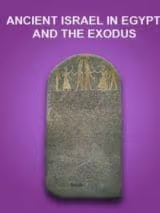
On this stela from El-Amarna, Egyptian King Akhenaten is seen with his wife Nefertiti and their daughters bearing offerings to the sun-disk Aten. Public domain, via Wikimedia Commons
Defying centuries of traditional worship of the Egyptian pantheon, Egyptian Pharaoh Akhenaten decreed during his reign in the mid-14th century B.C.E. that his subjects were to worship only one god: the sun-disk Aten. Akhenaten is sometimes called the world’s first monotheist. Did his monotheism later influence Moses—and the birth of Israelite monotheism?
In “Did Akhenaten’s Monotheism Influence Moses?” in the July/August 2015 issue of Biblical Archaeology Review, University of California, Santa Barbara, emeritus professor of anthropology Brian Fagan discusses this tantalizing question.
Egyptian King Akhenaten, meaning “Effective for Aten”—his name was originally Amenhotep IV, reigned from about 1352 to 1336 B.C.E. In the fifth year of his reign, he moved the royal residence from Thebes to a new site in Middle Egypt, Akhetaten (“the horizon of Aten,” present-day Tell el-Amarna), and there ordered lavish temples to be built for Aten. Akhenaten claimed to be the only one who had access to Aten, thus making an interceding priesthood unnecessary.
In the BAR article “The Monotheism of the Heretic Pharaoh,” Donald B. Redford, who excavated Akhenaten’s earliest temple at Karnak (in modern Thebes), describes how Akhenaten instituted worship of Aten:
The cult of the Sun-Disk emerged from an iconoclastic “war” between the “Good God” (Akhenaten), and all the rest of the gods. The outcome of this “war” was the exaltation of the former and the annihilation of the latter. Akhenaten taxed and gradually closed the temples of the other gods; the images of their erstwhile occupants were occasionally destroyed. Cult, ritual and mythology were anathematized, literature edited to remove unwanted allusions. Names were changed to eliminate hateful divine elements; and cities where the old gods had been worshipped, were abandoned by court and government.
Akhenaten destroyed much, he created little. No mythology was devised for his new god. No symbolism was permitted in art or the cult, and the cult itself was reduced to the one simple act of offering upon the altar. Syncretism was no longer possible: Akhenaten’s god does not accept and absorb—he excludes and annihilates.
Did Egyptian Pharaoh Akhenaten’s adamant worship of one deity influence the Biblical Moses, leader of the Israelite Exodus? Was Akhenaten’s monotheism the progenitor of Israelite monotheism? According to BAR author Brian Fagan, we are talking about two different kinds of monothesisms:
“Israelite monotheism developed through centuries of discussion, declarations of faith and interactions with other societies and other beliefs,” Fagan writes. “In contrast, Akhenaten’s monotheism developed very largely at the behest of a single, absolute monarch presiding over an isolated land, where the pharaoh’s word was divine and secular law. It was an experiment that withered on the vine.”
The Biblical Archaeology Society FREE publication Aspects of Monotheism: How God Is One, edited by Hershel Shanks and Jack Meinhardt, presents an exciting, provocative and readily understandable discussion of the origins and evolution of monotheism within Judaism and Christianity. The book is free for BAS Library members.
Not a BAS Library or All-Access Member yet? Join today.
When Tutankhaten—the second son of Akhenaten; we know him as the famous King Tut—ascended to the throne, he, working with his advisers, restored worship of the traditional Egyptian pantheon and its chief god, Amun. Tutankhaten also changed his name to Tutankhamun, meaning “the living image of Amun.”
To learn more about the monotheism of Egyptian King Akhenaten, read the full article “Did Akhenaten’s Monotheism Influence Moses?” by Brian Fagan in the July/August 2015 issue of Biblical Archaeology Review.
Subscribers: Read the full article “Did Akhenaten’s Monotheism Influence Moses?” by Brian Fagan in the July/August 2015 issue of Biblical Archaeology Review.
Not a BAS Library or All-Access Member yet? Join today.
This Bible History Daily feature was originally published on June 8, 2015.
Related reading in Bible History Daily
Out of Egypt: Israel’s Exodus Between Text and Memory, History and Imagination
All-Access members, read more in the BAS Library
Not a BAS Library or All-Access Member yet? Join today.
Related Posts





Must-Read Free eBooks

Unlock Unlimited Access to the Bible's Past

Unlock Unlimited Access to the Bible's Past
Become an All-Access Member to explore the Bible's rich history. Get Biblical Archaeology Review in print, full online access, and FREE online talks. Plus, enjoy special Travel/Study discounts. Don't miss out—begin your journey today!

I have always thought that the dating of the Exodus of the Hebrews was wrong. This is because there is no cognate to “Abram” in ANE literature until a late date. However when the Library of Ebla was discovered, my teacher, Rabbi Mayer Gruber, mentioned that a cognate to “Abram” was discovered which would push the probability that Abraham lived several centuries before. This of course would mean the Exodus happened several centuries before.
Torah.com recently published an article, “We were slaves of the Hyksos.” I always thought that the Bible mentioning that Pharoah was known as both “pharoah and king” was an odd statement. Who would dare to call Pharoah “king.” Egyptians? NO. Foreign dignitaries? NO. Only his army, families and possibly servants would be allowed to call him “King.”
I also read that the Hyksos were the first to use charioteer warfare. Important point to remember.
Hence the Exodus of the Hebrews with a “mixed host” probably happened under the Hyksos Pharoah with the end of the arm of the Hyksos charioteers, which would weakened its capabilities for Egypt to overthrow the Hyksos.
Therefore, Akenaten, who came to power many years later read or heard about the Israelites
“God” and made him an Egyptian god.
Oscar, your comment resonates as true within me. I think you have knowledge that I am missing. Can you contact me or do you have a website of sorts??
Its more logical to say the reverse. Akhenaton did not inspire Moses, rather he was inspired BY Moses.
For a king to simply do away with an entire priesthood out of the blue is impossible. Even the European kings had the tremendous power of the Roman Catholic Church supporting them abd even then it too years and years of negotiations including a healthy build up of converts among the populations. To just do away with the entire priesthood, the entire mythology and philosophy that people have been worshiping their entire lives… impossible. Some event had to have happened that was so dramatic and even traumatizing that the population wasnt willing to protest. Obviously that had to be the 10 plagues, followed by the exodus followed by the destruction of the entire Egyptian army
Shem, the son of Noah lived to be 800 years old. This means he was alive at the time of Abraham. Some scholars believe that Shem’s title was Michelzedek King of Salem. Scripture tells us that Abraham knew Shem/Michelzedek, and brought him back that which was stolen from him during a raid on his kingdom. Scripture tells us they even had dinner together, and Abraham was spiritually under Shem as he paid a tithe to him and Shim in return blessed him. So, it would not be a stretch to conclude that Abraham learned of God through the teachings of Shem. Shem would have told Abraham the creation story as told to him by his grand father Methuselah who personally knew Adam for 200 years. Therefore, we have a tremendously reliable passing down of information concerning the One True Creator God. Adam told Michelzedek who told his grandson Shem. After the flood, Shem not only told Abraham, but he also out lived Isaac and Jacob. In fact, he died only 40 years before the birth of Joseph. Therefore, an understanding of the One True Creator God was readily available to at least the people living in the Middle East. The fact that a Pharaoh knew of this idea would not be remarkable. And, while Moses grew up in Pharaoh’s court which worshiped a pantheon of god’s, he had his mother and older sister also living at court with him who would have taught him about their monotheistic beliefs.
It depends on whether you believe in either the Early Date Exodus (1446 BCE) or the Late Date Exodus (1230 BCE). If the Early Date Exodus then Akhenaten postdates Moses and could not have influenced him. However if you believe the Late Date Exodus date, then Moses postdates Akhenaten and could have been influenced by the latter.
Then there is Ahmed Osman’s theory that Akhenaten and Moses were one and the same!
I believe Yahweh was the Aten. Pronounced Yahten. Also known as Anu, same Cuneiform/Hieroglyphs . Atum is the Morning Star aka Morning Sun (Sun is a Star)…of Rev 22:16. He is seen in the form of Khepri pushing Yahweh/ Yahten with Akhenaten. These symbols of Khepri are also found with Cyrus the Great, Alexander the Great & Hezekiah in Ancient Israel artifacts. There is a scarab petroglyph in India, Alexander may have seen it? The scarab is a symbol of levitation. Amun was handing the Keys over to Christ/Adonai/Adapa/Adam root of David. Before Cronus he may have also lived with Ptah (Enki/Vishnu/Buddah/Pale White Horse) as an Oannes, wise about Animals with Anu. Adam may also be known as Adapa/Atum/Manu in different cultures. Enki Posidion may have warned Noah about his brother Enlil/Cronus flooding like in the book of Enoch. Amun Zeus and the Olympions waged war on Cronus who could be Satan the fallen one. Adapa is found in Sumerian Kings List with Alulim the first father of YAH Ten. You hear them both in Hallelujah.
The worship of the one true creator God Elohim started with Adam and Eve and was brought to the beginning of the nation of Israel with Abraham. Th pharaoh in this article was according to facts a polytheist before he decided to make the sun god his mani god and force it upon Egypt. His son god has nothing what soever to do with the Great I am who is the God of Abraham, Isaac and Jacob and who addressed Moses. This article is nothing but supposition and guess work ignoring the real facts of history.
Archaeology, alas, does not exist to reinforce the received dogma of American Protestants. The title of the publication, Biblical Archaeology Review, indicates it is a journal concerned with archeology related to the Bible in general, not only the rare discovery that might support the historicity of the ancient writings themselves. If inconvenient finds or scholarly theories offend your tender sensibilities instead of provoking thought then perhaps you might consider restricting your reading to the safe and approved “thinkers” of your denomination. Jesus readily issued challenges to the institutional theological beliefs of his time and purpose, and did not raise his skirts in indignation when challenged in turn. The Bible is surely a volume of collected mythologies and legendary stories and its value lies not in factuality—a modern concept not shared by the ancients—but in its spiritual truth, whatever that may mean to you. Attempting to force so grand a document into the confines of your belief systems bespeaks a weak, tiny, and fearful faith. I am surprised so many commentators with the title “Dr” before their names need to be reminded about any of this. Intellectual cowardice is not a good look