


Akhenaten and Moses
Did the monotheism of Egyptian Pharaoh Akhenaten influence Moses?

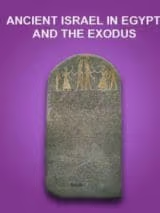
On this stela from El-Amarna, Egyptian King Akhenaten is seen with his wife Nefertiti and their daughters bearing offerings to the sun-disk Aten. Public domain, via Wikimedia Commons
Defying centuries of traditional worship of the Egyptian pantheon, Egyptian Pharaoh Akhenaten decreed during his reign in the mid-14th century B.C.E. that his subjects were to worship only one god: the sun-disk Aten. Akhenaten is sometimes called the world’s first monotheist. Did his monotheism later influence Moses—and the birth of Israelite monotheism?
In “Did Akhenaten’s Monotheism Influence Moses?” in the July/August 2015 issue of Biblical Archaeology Review, University of California, Santa Barbara, emeritus professor of anthropology Brian Fagan discusses this tantalizing question.
Egyptian King Akhenaten, meaning “Effective for Aten”—his name was originally Amenhotep IV, reigned from about 1352 to 1336 B.C.E. In the fifth year of his reign, he moved the royal residence from Thebes to a new site in Middle Egypt, Akhetaten (“the horizon of Aten,” present-day Tell el-Amarna), and there ordered lavish temples to be built for Aten. Akhenaten claimed to be the only one who had access to Aten, thus making an interceding priesthood unnecessary.
In the BAR article “The Monotheism of the Heretic Pharaoh,” Donald B. Redford, who excavated Akhenaten’s earliest temple at Karnak (in modern Thebes), describes how Akhenaten instituted worship of Aten:
The cult of the Sun-Disk emerged from an iconoclastic “war” between the “Good God” (Akhenaten), and all the rest of the gods. The outcome of this “war” was the exaltation of the former and the annihilation of the latter. Akhenaten taxed and gradually closed the temples of the other gods; the images of their erstwhile occupants were occasionally destroyed. Cult, ritual and mythology were anathematized, literature edited to remove unwanted allusions. Names were changed to eliminate hateful divine elements; and cities where the old gods had been worshipped, were abandoned by court and government.
Akhenaten destroyed much, he created little. No mythology was devised for his new god. No symbolism was permitted in art or the cult, and the cult itself was reduced to the one simple act of offering upon the altar. Syncretism was no longer possible: Akhenaten’s god does not accept and absorb—he excludes and annihilates.
Did Egyptian Pharaoh Akhenaten’s adamant worship of one deity influence the Biblical Moses, leader of the Israelite Exodus? Was Akhenaten’s monotheism the progenitor of Israelite monotheism? According to BAR author Brian Fagan, we are talking about two different kinds of monothesisms:
“Israelite monotheism developed through centuries of discussion, declarations of faith and interactions with other societies and other beliefs,” Fagan writes. “In contrast, Akhenaten’s monotheism developed very largely at the behest of a single, absolute monarch presiding over an isolated land, where the pharaoh’s word was divine and secular law. It was an experiment that withered on the vine.”
The Biblical Archaeology Society FREE publication Aspects of Monotheism: How God Is One, edited by Hershel Shanks and Jack Meinhardt, presents an exciting, provocative and readily understandable discussion of the origins and evolution of monotheism within Judaism and Christianity. The book is free for BAS Library members.
Not a BAS Library or All-Access Member yet? Join today.
When Tutankhaten—the second son of Akhenaten; we know him as the famous King Tut—ascended to the throne, he, working with his advisers, restored worship of the traditional Egyptian pantheon and its chief god, Amun. Tutankhaten also changed his name to Tutankhamun, meaning “the living image of Amun.”
To learn more about the monotheism of Egyptian King Akhenaten, read the full article “Did Akhenaten’s Monotheism Influence Moses?” by Brian Fagan in the July/August 2015 issue of Biblical Archaeology Review.
Subscribers: Read the full article “Did Akhenaten’s Monotheism Influence Moses?” by Brian Fagan in the July/August 2015 issue of Biblical Archaeology Review.
Not a BAS Library or All-Access Member yet? Join today.
This Bible History Daily feature was originally published on June 8, 2015.
Related reading in Bible History Daily
Out of Egypt: Israel’s Exodus Between Text and Memory, History and Imagination
All-Access members, read more in the BAS Library
Not a BAS Library or All-Access Member yet? Join today.
Related Posts





Must-Read Free eBooks


Unlock Unlimited Access to the Bible's Past

Unlock Unlimited Access to the Bible's Past
Become an All-Access Member to explore the Bible's rich history. Get Biblical Archaeology Review in print, full online access, and FREE online talks. Plus, enjoy special Travel/Study discounts. Don't miss out—begin your journey today!

Ahken-ATEN, was the pharaoh who was convinced of monotheism by one of his advisors Zaraph-Panea, who ix none other than the Biblical Patriarch Joseph, son of Jacob. He is the only historical pharaoh to have changed from polytheism to monotheism, and biblically speaking, the bible tells that Joseph had convinced a pharaoh of his God’s power by interpreting the pharaohs’ dreams. It says of that pharaoh, that he had asked many of his advisors, yet np pne cpuld help him with his troubling dreams, which shows he was a polytheist at that point in the story, and after they brought Joseph to him, and he correctly interpretted pharaoh’s dream, the pharaoh placed Joseph, a monotheist over ALL his House; which indicates that Joseph’s pharaoh, allowed Joseph’s God to have dominion over the entire kingdom of Egypt. Again, only One pharaoh fits this thought, Ahken-ATEN. Why do I hyphenate his name? Why the other proof I have of course. Upon the Temples to ATEN thereare hieroglyphs, and other symbols carved upon the main crossbeams connecting the columns & pillars. One is a Circle with Falcon’s wings, which represent Ahken-ATEN, and another symbol right there beside it, is of a Circle with Two serpents, 1 to the right and 1 to the left. The priestly tribe of Israel, was called Levy, both Moses and Aaron were of the tribe of Levy. At Isaiah 27:1 the name of The Sword of the God of Israel is written, “Upon Levy-ATEN the piecing serpent, and Upon Levy-ATEN the binding serpent”, a word that has been intentionally mistranslated to English as “LEVIATHAN”. The actual word comes from Levy-ATEN, the royal priesthood of the ATEN, and it means; “Unified with ATEN”. Now, as to it being a solar deity? Sorry, AhkenAten, the longest lived pharaoh was no dummy, he knew of Ra, the god of the sun. He would NOT have replaced it with another of the same type. The English word ATEN-tion, and ATEN-uate both come to mind, meaning “to bring to focus”, or to purify, or to Enlighten Spiritual consciousness. the symbol of Levy ATEN, is commensurate with the Zoroastrian, and East Asian Yin/Yang, the SINGULAR SPHERE of Duality, the Two serpents on the medical staff, and the zodiac sign of Libra. all connect. Of course this is only my opinion, and I could be wrong, too many coincidentals nake this feel true in my guts though. Sincerely…
I believe that you are right, I have been wondering about this for a while. But then isn’t the Aten the supreme monad, the Christian / Hermetic ‘pearl of great price’? Or indeed the Kabbalistic crown-sphere, Keter? I think it is a logical necessity that there should be a singular, unifying principle at the head of creation, and that this should be a sphere much like Plato describes in his Timaeus. The iconography of the two serpents aside the Aten also appear alongside the standard solar-disk, ie of Ra, making them quite ubiquitous. I think people do not like this explanation because it more or less proves that Biblical religion has decidedly pagan roots. Why should a small nation in the middle east lay claim to the sole standard of religious orthodoxy? God is quite universal.
Moses was a contemporary of Thutmose III.
Which means that Ahkenaten was a contemporary of Joshua.
Which means that Ahkenaten tried to institute Monotheism right as Joshua and the other “Apiru” (stateless nomads) were taking over Canaan.
Which means that Ahkenaten tried to institute Monotheism as a counter to the Joshua’s God (the God of Israel).
Apparently. . . Ahkenaten thought there was something to this whole “Monotheism” thing. . . seeing as how his entire Canaanite sphere of influence was taken over by stateless, nomadic Monotheists.
So glad to see BAR explore topics of this nature! I read it’s pages for scholarly discussion on issues that she’d light on the Bible, its writers and those who lived it’s stories. I do not take these stories literally but I do find God very much alive within its Spirit. That Spirit is always strengthened in my life when gaining information about the culture and practices of ancient peoples and God works through all of us to manifest the Love Christ died to bring into the world. Thank you BAR for being open minded and a little blasphemous at times! It helps me think and in so be a better pastor as I teach the Bible to so many hungry for a different take on a timeless truth.
Long before there were the 10 commandments and Moses there were the 42 negative confessions of maat known of and followed by the egyptians (africans). These 42 confessions include things like I have not killed, I have not stolen, etc. Moses was raised as an egyptian and eventually became an egyptian priest. He would have known of the these 42 “commandments” and included some of them within the 10 commandments…
Acts 7: 22 And Moses was learned in all the wisdom of the Egyptians, and was mighty in words and in deeds. Exodus 2:19 And they said, An Egyptian delivered us out of the hand of the shepherds, and also drew water enough for us, and watered the flock.
This is goofy. There is only one God…and he’s been around allot longer then Moses.
all what i believe that Akhenaton got his ideas of the one god cult from the the Jewish believe and also he had know a lot from their books about not only the god but about how Adam was looks like before Eve comes out of him and that affected on his figure on the wall of the temples
there is a lot to tell about that if any one is interested
It is the Jewish year 5775. 5775-2015 = 3760 BCE. If Ahkenaten reigned from 1352-1336 BCE, why would one hypothesize that he influenced a religion formed over 2400-years before he came to power, rather than the 2400-year old religion influenced his new one?
Long ago when reading a book now out of print called THE LAST HERETIC about Akhenaten the author translated some of his hymns of praise to the one true God as he understood Him and I was moved by how much they sounded like the Psalms of David.
Seems there is a connection here and the critical factor to determining who influenced who is the dating of the exodus and of Moses. If that event/person is placed in the mid 1400s then who influenced who is a question now answered.
Accept for a moment the thought that the new pharaoh rejected the corruption of the established religious order of his day and tried to create something better he recalled from the time of his grandfather. An interesting thought
In response to some of the comments here, I recommend Robert Wright, The Evolution of God (Little, Brown 2009). Wright sets out the progression of the ancient Hebrews from polytheism, to monolatry to monotheism over the course of many hundreds of years. I especially commend Chapters 6 and 7.
Despite the efforts of later (5th c bce) editors to eradicate the residual polytheistic and monolatric statements in the Hebrew Bible, many remain. In Gen. 3, Yahweh speaks to his council worried that Adam and Eve “will become like us”. Psalm 82 has God meeting with his divine council. Again in Genesis, the “Sons of God” mate with human women producing giants. The Sons of God are taken by many scholars to refer to the 70 sons of El, now that we have the Ugaritic texts to inform us. Again, in 1 Kings 22, Yahweh presides over a meeting of the host of heaven. Then, of course, Job 1 and 2 have Yahweh in council with the sons of god, including the one known as the Adversary (or Prosecutor, as it is a legal term). The roots of this concept go back to Sumerian, Akkadian and Babylonian roots.
Eventually, the concept became monolatric, with Yahweh being chief among the gods. Even the commandment to have no other gods before him does not deny the existence of other gods, only that they shall not be given preference to him. Monotheism, Wright argues, does not become a clear concept until maybe the 8th or 7th centuries bce, maybe even later.