


Akhenaten and Moses
Did the monotheism of Egyptian Pharaoh Akhenaten influence Moses?

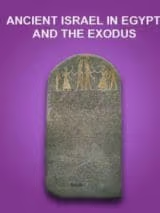
On this stela from El-Amarna, Egyptian King Akhenaten is seen with his wife Nefertiti and their daughters bearing offerings to the sun-disk Aten. Public domain, via Wikimedia Commons
Defying centuries of traditional worship of the Egyptian pantheon, Egyptian Pharaoh Akhenaten decreed during his reign in the mid-14th century B.C.E. that his subjects were to worship only one god: the sun-disk Aten. Akhenaten is sometimes called the world’s first monotheist. Did his monotheism later influence Moses—and the birth of Israelite monotheism?
In “Did Akhenaten’s Monotheism Influence Moses?” in the July/August 2015 issue of Biblical Archaeology Review, University of California, Santa Barbara, emeritus professor of anthropology Brian Fagan discusses this tantalizing question.
Egyptian King Akhenaten, meaning “Effective for Aten”—his name was originally Amenhotep IV, reigned from about 1352 to 1336 B.C.E. In the fifth year of his reign, he moved the royal residence from Thebes to a new site in Middle Egypt, Akhetaten (“the horizon of Aten,” present-day Tell el-Amarna), and there ordered lavish temples to be built for Aten. Akhenaten claimed to be the only one who had access to Aten, thus making an interceding priesthood unnecessary.
In the BAR article “The Monotheism of the Heretic Pharaoh,” Donald B. Redford, who excavated Akhenaten’s earliest temple at Karnak (in modern Thebes), describes how Akhenaten instituted worship of Aten:
The cult of the Sun-Disk emerged from an iconoclastic “war” between the “Good God” (Akhenaten), and all the rest of the gods. The outcome of this “war” was the exaltation of the former and the annihilation of the latter. Akhenaten taxed and gradually closed the temples of the other gods; the images of their erstwhile occupants were occasionally destroyed. Cult, ritual and mythology were anathematized, literature edited to remove unwanted allusions. Names were changed to eliminate hateful divine elements; and cities where the old gods had been worshipped, were abandoned by court and government.
Akhenaten destroyed much, he created little. No mythology was devised for his new god. No symbolism was permitted in art or the cult, and the cult itself was reduced to the one simple act of offering upon the altar. Syncretism was no longer possible: Akhenaten’s god does not accept and absorb—he excludes and annihilates.
Did Egyptian Pharaoh Akhenaten’s adamant worship of one deity influence the Biblical Moses, leader of the Israelite Exodus? Was Akhenaten’s monotheism the progenitor of Israelite monotheism? According to BAR author Brian Fagan, we are talking about two different kinds of monothesisms:
“Israelite monotheism developed through centuries of discussion, declarations of faith and interactions with other societies and other beliefs,” Fagan writes. “In contrast, Akhenaten’s monotheism developed very largely at the behest of a single, absolute monarch presiding over an isolated land, where the pharaoh’s word was divine and secular law. It was an experiment that withered on the vine.”
The Biblical Archaeology Society FREE publication Aspects of Monotheism: How God Is One, edited by Hershel Shanks and Jack Meinhardt, presents an exciting, provocative and readily understandable discussion of the origins and evolution of monotheism within Judaism and Christianity. The book is free for BAS Library members.
Not a BAS Library or All-Access Member yet? Join today.
When Tutankhaten—the second son of Akhenaten; we know him as the famous King Tut—ascended to the throne, he, working with his advisers, restored worship of the traditional Egyptian pantheon and its chief god, Amun. Tutankhaten also changed his name to Tutankhamun, meaning “the living image of Amun.”
To learn more about the monotheism of Egyptian King Akhenaten, read the full article “Did Akhenaten’s Monotheism Influence Moses?” by Brian Fagan in the July/August 2015 issue of Biblical Archaeology Review.
Subscribers: Read the full article “Did Akhenaten’s Monotheism Influence Moses?” by Brian Fagan in the July/August 2015 issue of Biblical Archaeology Review.
Not a BAS Library or All-Access Member yet? Join today.
This Bible History Daily feature was originally published on June 8, 2015.
Related reading in Bible History Daily
Out of Egypt: Israel’s Exodus Between Text and Memory, History and Imagination
All-Access members, read more in the BAS Library
Not a BAS Library or All-Access Member yet? Join today.
Related Posts





Must-Read Free eBooks


Unlock Unlimited Access to the Bible's Past

Unlock Unlimited Access to the Bible's Past
Become an All-Access Member to explore the Bible's rich history. Get Biblical Archaeology Review in print, full online access, and FREE online talks. Plus, enjoy special Travel/Study discounts. Don't miss out—begin your journey today!

I always thought it was because God said:
שְׁמַע, יִשְׂרָאֵל: יְהוָה אֱלֹהֵינוּ, יְהוָה אֶחָד.
The article should be more properly titled, “Was Akhenaten influenced by Moses monotheism?”, since Moses lived decades before him. People compare the hymn to the aten to pslams 104. David couldn’t have borrowed from the hymn, because it laid buried at the abandon Amarna. It’s more reasonable to assume Akhenaten borrowed from the psalm which would make its original author Moses or perhaps Joseph or some other Israelite. In the Amarna letters the ruler of Jerusalem asks why the king favors the apiru invading the land over him. He may have favored them cause he knew who they were and who their single God was. Akhenaten was simply attempting his own version of monotheism. It died when he did and Moses’ monotheism has never been lost, but has spread throughout the centuries, and the world.
I haven’t yet received the new issue, so I don’t know whether he mentions this, but Fagan is not the first to suggest the connection. In Moses and Monotheism, Sigmund Freud did just that, suggesting that the Hebrew God was a combination of the life-giving sun god, Aten, and the jealous, violent Midianite volcano god, Yahweh.
To Dr. Saul Pressman: Scholars are divided over the dating of the Exodus. Some even reject its historicity.
One of the earliest attempts at monotheism was made by Menes (perhaps identical with Narmer), the first pharaoh of a united Egypt, c. 3100 B.C.E.
As has been pointed out, Moses pre-dated Akhenaten by about a century. Should this story not read, therefore: “Did Moses’ Monotheism Influence Akhenaten?”
Spiritual and moral qualities lacking. Some scholars suggest that whatever concept of sin was manifest in certain Egyptian religious texts was the later result of Semitic influence. Yet, confession of sin was always in a negative sense, as the Encyclopædia Britannica (1959, Vol. 8, p. 56) comments: “When [the Egyptian] confessed he did not say ‘I am guilty’; he said ‘I am not guilty.’ His confession was negative, and the onus probandi [the burden of proof] lay on his judges, who, according to the funerary papyri, always gave the verdict in his favour—or at any rate it was hoped and expected that they would do so.” (Contrast Ps 51:1-5.) Ancient Egypt’s religion appears to have been mainly a matter of ceremonies and spells, designed to achieve certain desired results through the providence of one or more of their numerous gods.
Though the claim is made that a form of monotheism existed during the reigns of Pharaohs Amenhotep III and Amenhotep IV (Akhenaton), when the worship of the sun-god Aton became nearly exclusive, it was not a true monotheism. The Pharaoh himself continued to be worshiped as a god. And even in this period there was no ethical quality to the Egyptian religious texts, the hymns to the sun-god Aton merely praising him for his life-giving heat but remaining barren of any expression of praise or appreciation for any spiritual or moral qualities. Any suggestion that the monotheism of Moses’ writings derived from Egyptian influence is therefore completely without foundation.
https://wol.jw.org/en/wol/d/r1/lp-e/1200001265?q=monotheism&p=par
In MOSES THE EGYPTIAN Jan Assman makes just this argument in 2003. I’m surprised that his work is nowhere referenced!
Dr Saul, how do you date so definitively a fictional character that has no historical documentation outside of the Jewish scriptures?
As stated above, scholars are divided regarding dating of the Exodus, though probably not evenly. Of those who accept its historicity, I believe most favor the later dating (1290 B.C.E. or later).
I wll not state my opinion of this article, I just want you to realize that “you will know the truth and the truth will set you free.”
Many people believe that the exodus happened at the end of the 13th Dynasty. When the exodus is placed there, we find a great Amount of Archaeology Evidence that supports the Exodus account. For example the Ipuwer Papyrus talks of “THE PYRAMID BUILDERS” [after the 13th Dynasty they no longer build Pyramids] and talks of the plagues on Egypt that are described in the Bible.