


Ramesses the Great—and the Missing Exodus
Reviewing the exhibit Ramses and the Pharaohs’ Gold
Thomas E. Levy
October 23, 2026
5 Comments
2393 views

A colossal head of Ramesses II greets visitors to Ramses and the Pharaohs’ Gold, presented at NEON at Battersea Power Station in London. Photo courtesy Thomas E. Levy.
Ramses and the Pharaohs’ Gold, now at NEON at Battersea Power Station in London, opened earlier this year. The international exhibition features some 180 ancient Egyptian objects, including the cedar coffin that held the mummified remains of Ramesses II. It is produced by World Heritage Exhibitions/NEON in partnership with Egyptian authorities as a major international touring exhibition, including Paris, Sydney, and Tokyo. Here, archaeologist and frequent BAR contributor Thomas Levy offers his thoughts on where the exhibit succeeds in telling the story of ancient Egypt’s most powerful ruler—and where it misses the mark.
I thoroughly enjoyed Ramses and the Pharaoh’ Gold. The exhibition succeeds remarkably well in bringing Ramesses II to life.[1] Particularly compelling are the digital facial reconstructions presenting Ramesses as a younger man and again in old age based on his mummified remains. These renderings allow us to look beyond the idealized royal images on Egyptian monuments and contemplate the human being behind them.
The exhibition presents Ramesses as warrior, builder, diplomat, husband, father, and near-divine king. Ramesses II faced the Hittite king Muwatalli II at Kadesh, but the eventual peace was negotiated years later with Muwatalli’s brother, Hattusili III, after a dynastic struggle brought him to the Hittite throne. Here, the exhibition’s enthusiasm gets somewhat ahead of the evidence. Its publicity calls this the “world’s first peace treaty.” It is unquestionably one of the great surviving diplomatic documents of antiquity, and especially important because versions survive from both the Egyptian and Hittite sides. But earlier treaties are known from the ancient Near East. Calling it humanity’s first peace treaty makes for a memorable museum label, but the historical reality is more complicated.
There is also an interesting irony. Our ability to understand Ramesses’s diplomatic achievements depends on the modern decipherment of Egyptian writing. Knowledge of how to read hieroglyphs disappeared in late antiquity. Only after the discovery of the Rosetta Stone in 1799 and Jean-François Champollion’s breakthrough in 1822 did pharaonic Egypt begin to speak to the modern world again through its own texts.
In this respect, Egypt differs from civilizations whose foundational textual traditions continued to be transmitted. The Hebrew Bible preserved traditions concerning ancient Israel; Greek literature transmitted Homer, Herodotus, and other ancient authors; and China maintained an extraordinary continuity of written historical traditions. Egypt itself was never forgotten, but its ancient textual record had to be recovered through archaeology and decipherment.

Representation of Ramesses II with a Levantine captive. Photo courtesy Thomas E. Levy.
This makes the most surprising omission from an otherwise impressive exhibition all the more striking: There is virtually nothing about Ramesses II and the Exodus.
This is not to say that an archaeological exhibition should identify Ramesses II as “the pharaoh of the Exodus.” It should not. The identity of the biblical pharaoh remains uncertain, while the historicity, chronology, and archaeological background of the Exodus continue to be vigorously debated. Nevertheless, Ramesses II has for generations been the pharaoh most widely associated with the Exodus, in large part because Exodus 1:11 names a store city of “Rameses” as one the enslaved Israelites built, which is generally identified with the city of Pi-Ramesses in the eastern Nile Delta. Because scripture states that the enslaved Israelites built this city, and archaeology confirms it was founded by and dedicated to Ramesses II, it implies he was the oppressive pharaoh under discussion. On the other hand, the name “Rameses” may be a later scribal addition. A similar circumstance occurs in Genesis 47:11, referring to the “land of Rameses” during the time of Joseph, centuries before any pharaoh named Ramesses lived.
Whether Ramesses II had anything to do with a historical Exodus remains an open question. But the association is itself an important part of his modern legacy. An exhibition devoted to Ramesses should explain why millions of people associate his name with Moses and the Exodus—and why archaeologists and historians remain cautious about that identification.
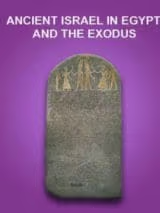
Even more puzzling is the treatment of Ramesses’s son and successor, Pharaoh Merneptah. Merneptah is prominently represented, yet there is no meaningful discussion of the most famous historical document from his reign: the Merneptah Stele, often called the “Israel Stele.”
In 1896, the pioneering British Egyptologist, Sir William Flinders Petrie was excavating Merneptah’s mortuary temple at Thebes when his expedition uncovered the massive granite stela. Petrie immediately recognized the extraordinary significance of the reference to Israel, reportedly predicting, “This stele will be better known in the world than anything else I have found.” He was right.
Dating to about 1208 BCE, the inscription contains the earliest generally accepted written reference to a people called Israel outside the Bible. In celebrating Merneptah’s victories in Canaan, the text declares that “Israel is laid waste.” The boast is conventional Egyptian royal propaganda, but the way Israel is written is historically important: The Egyptian determinative identifies Israel as a people, rather than a territorial city-state such as Ashkelon or Gezer.
Whatever one concludes about the Exodus, the conquest traditions, or the complex processes that produced early Israel, the stela provides a crucial chronological anchor: By about 1208 BCE, “Israel” had entered the historical record.

The Merneptah Stele. Credit: BAS.
The juxtaposition is extraordinary. Ramesses II has long been proposed as the pharaoh associated with the Exodus, while his immediate successor provides the earliest generally accepted extrabiblical reference to Israel already in Canaan. The stela neither proves the Exodus nor tells us how Israel originated. But surely this historical intersection deserves acknowledgment.
The omission is especially unfortunate because Petrie is one of the towering figures in the development of British archaeology. A London exhibition offered an ideal opportunity to connect Ramesses and Merneptah with Britain’s extraordinary role in the emergence of Egyptology and biblical archaeology.
The international nature of the exhibition may help explain what happened. World Heritage Exhibitions and NEON have created a standardized narrative capable of traveling successfully between very different international audiences. Indeed, Egyptian officials have described the tour as a form of Egyptian “cultural diplomacy.” There is nothing objectionable about this. Ancient Egypt deserves to be presented on its own terms rather than simply as background scenery for the Bible, but an international exhibition need not mean an identical interpretive experience everywhere.
The exhibition itself demonstrates this in other cities. When it appeared at San Francisco’s de Young Museum a few years ago, local curator and Egyptologist Renée Dreyfus, then Curator in Charge of Ancient Art at the Fine Arts Museums of San Francisco, was incorporated into its presentation. One display in London featured her explaining the significance of the extraordinary jewelry of Sheshonq II, including a bracelet incorporating a much earlier Mesopotamian cylinder seal. Why not do something comparable in Britain?
A modest London-specific panel could have introduced Petrie, his discovery of the Merneptah Stele, and Britain’s foundational contribution to Egyptian and biblical archaeology. Such an addition would not have disrupted the exhibition’s Egyptian focus or required taking a position on the historicity of the Exodus. It would simply have connected the objects to the intellectual history of the country in which they were being displayed.
The exhibition succeeds wonderfully in resurrecting Ramesses the man. Seeing his reconstructed face change from a vigorous younger ruler to an elderly king is unforgettable. But Ramesses II’s afterlife extends beyond temples, battles, gold, and colossal statues. For millions, his name also intersects with one of the foundational narratives of Western civilization: the Exodus. Popular culture cemented that association spectacularly in Cecil B. DeMille’s Academy Award-winning 1956 epic The Ten Commandments, in which Yul Brynner portrayed Ramesses II opposite Charlton Heston’s Moses. The image of Brynner’s proud and imperious Ramesses became, for generations of moviegoers, virtually inseparable from the pharaoh of the Exodus.
The biblical text itself never names that pharaoh, though Pi-Ramesses invites the possibility it was Ramesses II. Further, the victory monument of Ramesses’s son and successor, Merneptah, provides the earliest generally accepted extrabiblical evidence for a people called Israel. An exhibition devoted to the extraordinary legacy of Ramesses the Great need not tell visitors what to believe about that history, but it should tell them that the evidence—and the debate—exist.
[1] Both Ramses and Ramesses are common spellings of the pharaoh’s name.
Thomas E. Levy is Distinguished Professor and inaugural holder of the Norma Kershaw Chair in the Archaeology of Ancient Israel and Neighboring Lands at the University of California, San Diego.
Become a BAS All-Access Member Now!
Read Biblical Archaeology Review online, explore 50 years of BAR, watch videos, attend talks, and more

Related reading in Bible History Daily
All-Access members, read more in the BAS Library
Not a BAS Library or All-Access Member yet? Join today.
Related Posts


Must-Read Free eBooks

Unlock Unlimited Access to the Bible's Past

Unlock Unlimited Access to the Bible's Past
Become an All-Access Member to explore the Bible's rich history. Get Biblical Archaeology Review in print, full online access, and FREE online talks. Plus, enjoy special Travel/Study discounts. Don't miss out—begin your journey today!

The archaeological evidence (Merneptah stele) exists for a people called Israel in the latest Bronze Age. A people already in Canaan, that clearly had not occupied urban centers like the Book of Joshua claims. We already know that the Israelites really were Canaanites evolved from within that replaced the latter gradually more in line with the Book of Judges narrative. There isn’t any evidence for Exodus narrative. A museum should present facts, not religious myths.
Was there an Exodus? Between the Middle Kingdom and the New Kingdom, Egypt was ruled by a Semitic group known as Hyksos. During that period, there were large Semitic settlements in Egypt that disappeared with the rise of the New Kingdom. It would be logical to assume that sort of exodus by these people existed, that their logical destination was Canaan and they, either alone or allied with some existing residents conquered Canaan. While other than the Bible, we have only a limited idea of what happened, the basic idea of an exodus and conquest is pretty certain.
The oral story of the Exodus was written down hundreds of years after it took place, but using the place names of cities that were rebuilt/renamed during the Egyptian Nineteenth Dynasty.
I saw a compelling video from Joel Kramer on the Exhibition Bible site, he is a biblical archeologist. He has quite a convincing take on Amenhotep being the exodus Pharoah. Weben Sinue with his princes lock or horse hair, his first born son that died mysteriously, his name and canopic jar found, along with his mummy found in Amenhotep’s tomb. Check it out, very interesting!
Tom Levy your measured, diplomatic review is to be commended. Yes indeed a gaffe that the lifelong work of Petrie in Egypt and his innumerable publications are not brought to the fore, particularly on British territory. No less sad that the purported association of Ramses ll and the Exodus are not mentioned and even more so the identification of israel as a people inhabiting the southern Levant on the Stele of Merneptah.